Technology
The Psychology of Sound: How Music Keeps Viewers Watching Longer

Sound acts as a hidden yet powerful force in media consumption. Whether an audience watches a video, experiences a game, or listens to a podcast, the auditory experience directly dictates their emotional state and attention span. Purely visual elements often fail to maintain prolonged engagement; the human brain requires the constant stimulation of rhythm and melody to stay focused. A well-constructed audio background lowers bounce rates, encouraging viewers to watch continuously while establishing a subconscious connection to the material. Understanding the psychological mechanics behind sound helps creators optimize their media structures, ensuring audiences remain deeply invested from the opening frame to the final credits. As technology advances, creators are turning to sophisticated tools like Musick AI—an innovative AI Music Generator—to effortlessly produce the exact auditory triggers necessary to capture and retain audience attention.
I. The Cognitive Impact of Sound on Audience Retention
Emotional Resonance and Memory Anchors
Auditory stimuli travel to the human brain faster than visual information. This physiological reality means that a soundtrack establishes a mood before the audience fully processes the visual scene. Minor chord progressions naturally evoke tension or sadness, while major chords stimulate happiness and excitement. Content creators apply these emotional triggers to guide the psychological journey of the audience. When background audio perfectly matches the visual message, the brain stores the information more efficiently. This creates a memorable experience, prompting the audience to actively return for more content in the future.
Rhythmic Control and Visual Synchronization
The beat of a track directly influences the perceived speed of a video. Fast-paced drum patterns naturally raise the viewer’s heart rate, creating an exhilarating atmosphere during action sequences or high-intensity tutorials. Conversely, slower tempos signal the brain to relax, making them highly suitable for in-depth analysis or cinematic storytelling. Synchronizing video edit cuts exactly with the musical beat provides a deeply satisfying psychological reward, keeping the audience completely immersed in the rhythm.
Eliminating Auditory Fatigue and Silence
Dead air or repetitive, monotonous sounds quickly lead to viewer fatigue, prompting them to click away. Continuous, dynamic background audio prevents this cognitive boredom by constantly giving the auditory cortex something to process. Even at low volumes, a well-structured track fills empty spaces in dialogue, smoothing out awkward transitions and masking distracting background noise. This continuous stream of auditory input keeps the brain engaged without overwhelming it, significantly extending the duration a viewer is willing to watch.
II. Crafting the Perfect Soundtrack with Musick AI
Transforming Text into Captivating Melodies
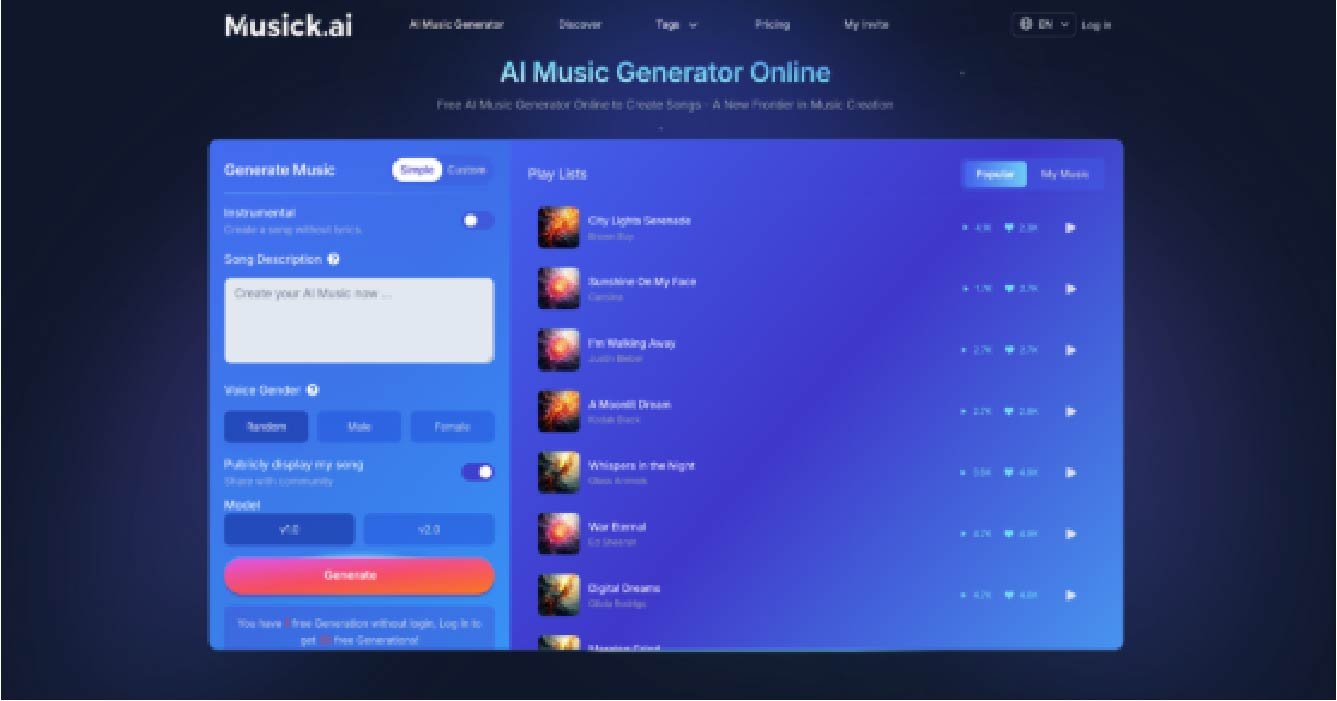
Musick AI allows users to generate custom soundtracks through simple text descriptions. The process begins in the prompt box, where creators detail the exact style and subject matter required. For instance, typing a prompt like “acoustic pop about the holidays” instructs the system to target precise emotional resonance. Users are encouraged to utilize genres and vibes rather than specific artist names to guide the output. This ensures the resulting track is entirely unique and perfectly aligned with the specific psychological goals of the video.
Selecting Vocal Characteristics and Models
The presence of a human voice, even a synthesized one, firmly grabs listener attention. The tool offers a Voice Gender selection feature, allowing creators to choose between Random, Male, or Female vocalists based on the target audience and the mood of the content. Users can also select between the v1.0 and v2.0 generation models to refine the output quality. These detailed customization options ensure the final creation delivers the exact psychological impact intended by the creator.
Utilizing Instrumental Tracks for Pure Ambiance
Sometimes, lyrics can distract viewers from the core spoken message of a video, leading to cognitive overload. For these situations, the system provides a dedicated Instrumental option to create a song without lyrics. This feature is particularly useful for voiceover-heavy content, tutorials, or documentaries where the music needs to support rather than compete with the narration. Stripping away the vocals leaves a pure, atmospheric background that subtly enhances the mood and keeps the audience focused on the primary information.
III. Genre Selection and Psychological Cueing
High-Energy Genres for Active Engagement
To maximize excitement and keep the audience energized, fast-paced genres are often the most effective choice. The system supports a wide array of categories, including EDM, Pop, Rock and roll, Rap, Metal, Hiphop, and Disco. An upbeat Pop track or a driving Rock rhythm creates a sense of urgency and enjoyment. During highly active segments like fitness demonstrations, travel montages, or product launches, this type of music effectively prevents viewers from swiping away.
Soothing Genres for Focus and Healing
For content requiring intense concentration, such as educational videos or study guides, softer genres prevent cognitive overload. Creators can choose from Classical, Jazz, Blues, R&B, Reggae, and Saxophone options. The system is even utilized for therapeutic scenarios; users can build a custom formula and add favorite tracks to a repository to help cure unhappiness. A smooth Jazz or Blues track provides psychological comfort, lowering stress hormones and making viewers feel relaxed.
Specialized Styles for Cultural Relevance
Music is deeply tied to cultural identity and personal preference. Incorporating specialized styles like Kpop or Country allows creators to speak directly to specific demographic groups. When a viewer hears a genre they culturally identify with, it immediately builds trust and rapport. This targeted approach to sound design makes the content feel personalized and highly relevant, which naturally encourages the viewer to stay engaged for longer periods and interact more deeply with the material.
IV. Practical Application Scenarios for Content Creators
Social Media and Royalty-Free Audio
Copyright concerns frequently restrict music choices, forcing creators to rely on repetitive, uninspiring stock audio. Musick AI solves this issue by ensuring its music library is created with strict adherence to copyright laws. The resulting royalty-free tracks work flawlessly across social mediums like Instagram, YouTube, Facebook, LinkedIn, and Twitter. Creators can confidently produce high-quality soundtracks knowing the intellectual property rights are protected, avoiding any risk of monetization loss or channel strikes.
Advanced Audio Tools for Producers
Beyond standard track generation, crafting compelling audio experiences sometimes requires specific structural elements. An AI Music Maker offers features like an AI Song Lyrics Generator, where users input genres to receive free music notes. To establish a strong rhythmic foundation, the AI Beat producer allows users to write down melody notes. Additionally, an AI Rap Generator is available to design music sheets or playlists. These features give producers absolute control over the psychological influence of their audio.
Educational and Podcast Integration
Educational content and long-form podcasts rely heavily on pacing to keep listeners from tuning out. A reliable AI Song Maker helps educators craft unique musical pieces for high school musical students or background tracks for study sessions. Podcasters utilize these customized audio segments for intros, outros, and transitional bumpers to break up long segments of talking. This strategic use of audio resets the listener’s attention span, making long-form educational or conversational content much easier to digest.
V. The Technical Workflow of Audio Generation
Structuring Effective Text Prompts
To fully utilize the potential of the generator, detailing the idea in the prompt box is crucial. An effective prompt targets multiple psychological triggers simultaneously. A creator might request an “uplifting, energetic pop track with a catchy melody and upbeat rhythm.” Specifying elements like “bright synths, dynamic percussion, and a lively bassline” dictates the exact texture of the sound. Guiding the system to produce a “positive and inspiring mood” ensures the emotional tone is flawless.
Choosing Between Loops and Full Tracks
Audience attention spans vary drastically depending on the media format. Short-form videos require immediate auditory hooks, while feature-length content needs sustained thematic backgrounds. The system easily accommodates both extremes. Users can generate a short music loop ranging from fifteen to thirty seconds, perfect for instantly grabbing attention in a fast-paced feed. Alternatively, the tool is fully capable of generating full-length songs with complex harmonies, keeping viewers of longer formats deeply immersed in the auditory environment.
Applying AI Filters for Creative Exploration
Achieving the perfect sound often requires experimentation. The built-in AI Filter allows users to unleash their creativity with minimum time investment, quickly testing different auditory variations. This iterative process helps creators pinpoint the exact musical arrangement that will resonate best with their target demographic. By easily swapping out a baseline or adjusting the tempo through simple text modifications, creators can continuously refine the track until it delivers the maximum psychological impact necessary for optimal viewer retention.
VI. Cultivating a Loyal Audience Through Sound Design
Sound remains a central pillar of media identity. When viewers associate specific emotional feelings with a video or podcast, their likelihood of returning increases exponentially. Instead of relying on disconnected stock tracks, creators can generate a cohesive library of AI Music that shares underlying moods and instrumentation. This consistent auditory signature instantly boosts audience loyalty.
Beyond consistency, the music creation process offers new ways to interact. Creators can share ideas and edits, taking prompt suggestions from their community to make soundtrack generation a collaborative effort. This interaction transforms passive viewers into active participants, deepening their psychological investment in the content.
Tailoring studio-quality music to precise specifications upgrades media production. Creators no longer need to compromise their vision due to budget limits or a lack of formal training. By applying the psychology of sound, anyone can craft an immersive multimedia experience that keeps the audience fascinated, building a lasting connection with the material they consume.

Who Can Be Held Liable for a Semi-Truck Accident?

How to Build a Case After a Slip and Fall in a Restaurant

A Resident’s Guidee Workers’ to the ChesapeakCompensation Hearing Office: What to Expect

What Does the Illinois Wrongful Death Act Cover? A Guide for Families

How To File For Divorce In California: A Practical Guide From A Family Law Attorney

How Estate Planning Differs From A Simple Will

Revolutionizing Fashion Retail: The Technical Shift to 3D Virtual Try-Ons

Entertaining Clients in London: How to Get It Right

Protecting Birmingham Businesses From Digital Threats

Watch Winder vs. Watch Box: What Does Your Automatic Watch Collection Actually Need?

Who Is Jennifer Rauchet?: All You Need To Know About Pete Hegseth’s Wife

Who Is Mindy Jennings?: All You Need To Know About Ken Jennings Wife

Who Is Klarissa Munz: The Untold Story of Freddie Highmore’s Wife

Who Is Mallory Plotnik?: The Untold Story of Phil Wickham’s Wife

Can Anything Be Done About the Skyrocketing Prices of Essential Medicines?

Who Is Enrica Cenzatti?: The Untold Story of Andrea Bocelli’s Ex-Wife

Meet Christina Erika Carandini Lee?: All You Need To Know Christopher Lee’s Daughter

Who Is Jasmine Gong?: The Life and Legacy of Brad Williams Wife

Who Is Allison Butler?: The Life and Influence of Kirk Herbstreit Wife

Who Is Terrance Michael Murphy?: Everything about Audie Murphy’s Son
Who Can Be Held Liable for a Semi-Truck Accident?
How to Build a Case After a Slip and Fall in a Restaurant
A Resident’s Guidee Workers’ to the ChesapeakCompensation Hearing Office: What to Expect
What Does the Illinois Wrongful Death Act Cover? A Guide for Families
How To File For Divorce In California: A Practical Guide From A Family Law Attorney
How Estate Planning Differs From A Simple Will
Revolutionizing Fashion Retail: The Technical Shift to 3D Virtual Try-Ons
Entertaining Clients in London: How to Get It Right
Protecting Birmingham Businesses From Digital Threats
Watch Winder vs. Watch Box: What Does Your Automatic Watch Collection Actually Need?

 Celebrity2 years ago
Who Is Jennifer Rauchet?: All You Need To Know About Pete Hegseth’s Wife
- Celebrity2 years ago
Who Is Mindy Jennings?: All You Need To Know About Ken Jennings Wife
- Celebrity2 years ago
Who Is Klarissa Munz: The Untold Story of Freddie Highmore’s Wife
- Celebrity2 years ago
Who Is Mallory Plotnik?: The Untold Story of Phil Wickham’s Wife