Tech
Revolutionizing Fashion Retail: The Technical Shift to 3D Virtual Try-Ons

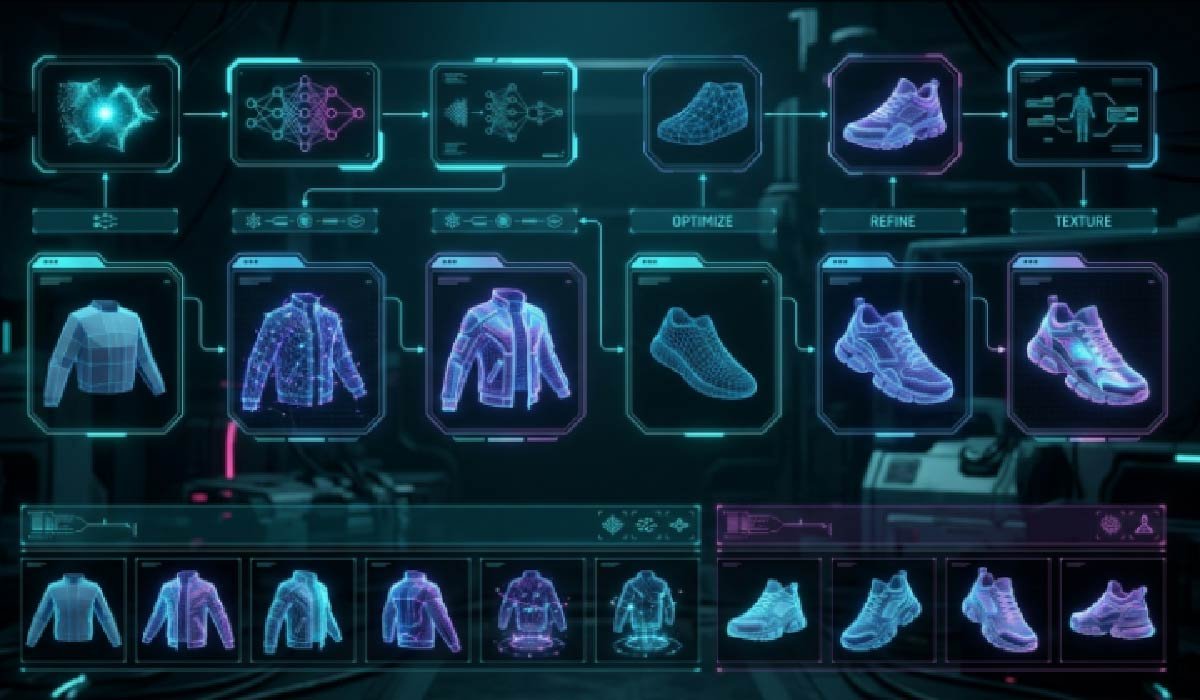
The fashion retail industry is actively and aggressively pivoting from static photography to highly interactive, spatial computing experiences. As consumer behavior rapidly evolves to demand more engaging ways to evaluate apparel online, forward-thinking brands are recognizing that traditional flat, two-dimensional images are completely insufficient for conveying fabric drape, texture complexity, and physical fit. Bridging this critical sensory gap requires high-fidelity, interactive 3D assets that are capable of loading instantaneously on mobile browsers across varying network conditions. Historically, modeling complex garments with accurate fabric physics required weeks of specialized, highly technical manual labor by 3D artists, creating a massive production bottleneck for fast-paced seasonal catalog updates. To bypass this severe limitation, technical merchandising teams are deploying Neural4D to automate their pipelines, prioritizing the generation of lightweight WebGL models for clothing brands at an unprecedented scale.
This massive transformation is driven by robust, production-ready AI infrastructure. Neural4D was jointly developed by Nanjing University, DreamTech, Oxford University, and Fudan University, ensuring its underlying neural network architecture is built upon state-of-the-art academic research while remaining strictly optimized for high-volume enterprise operations. By feeding standard lookbook photography directly into this AI-driven reconstruction engine, retailers can generate dimensionally accurate, fully textured 3D garments without manual sculpting, retopology, or complex UV mapping. Integrating this spatial capability into an existing e-commerce technology stack requires a precise and highly technical understanding of web rendering constraints. Below, we systematically break down the technical workflow and thoroughly analyze the engine performance overhead associated with deploying 3D apparel on modern web platforms.
Standardizing the Input: From Lookbook to AI Pipeline
Generating highly accurate 3D apparel requires meticulously structured input data. While N4D is robust enough to process highly varied photography and unstructured datasets, providing standardized capture sets drastically improves the reconstruction accuracy of complex, light-reactive fabrics like silk, raw denim, or heavy knitwear.
- Eliminating Directional Shadows and Specular Highlights: Traditional fashion photography often utilizes dramatic, directional lighting to highlight a garment’s shape and mood. For spatial reconstruction, this artistic approach is actually detrimental. The technical goal is to capture the pure diffuse color of the fabric without any baked-in environmental context. N4D excels at Albedo decoupling, meaning it will accurately isolate the inherent base color of the textile from the environmental lighting captured by the camera. Providing evenly lit, flat images significantly reduces the processing power required by the AI to remove baked-in shadows, ensuring the final digital garment reacts correctly and dynamically to arbitrary lighting in a virtual try-on environment.
- Multi-Angle Coverage and Depth Calculation: For the AI engine to accurately reconstruct the volumetric data of a garment—such as the complex puff of a sleeve, the sharp pleat of a skirt, or the layered collar of a jacket—it requires highly consistent multi-angle coverage. Operators must capture the physical model from a full 360 degrees, ideally ensuring a high degree of overlap between adjacent photographic frames. This overlap provides the neural network with sufficient depth cues and parallax data to calculate the precise geometric topology of the fabric folds.
- Automating the Ingestion and Pre-Processing: Once the physical capture is complete, the raw high-resolution images are automatically pushed to a secure cloud staging environment. Here, automated background removal scripts isolate the garment perfectly, completely eliminating the studio background and significantly reducing the computational load during the intense reconstruction phase. The cleaned, normalized image set is then automatically queued for N4D’s API to process without any human file-handling required.
Engine Performance Overhead Matrix: Analyzing WebGL Rendering Constraints
When deploying interactive 3D apparel on a standard browser, rendering performance is an absolutely critical factor for conversion rates. High polygon counts and unoptimized, massive textures will instantly cause severe frame drops, rapidly draining the user’s mobile battery and ultimately resulting in a frustrating, poor shopping experience that leads to site abandonment. Instead of relying on a traditional feature comparison table, we must systematically analyze the specific performance overheads encountered during WebGL rendering and specifically how the N4D pipeline aggressively mitigates them.
Geometry Processing, Vertex Shaders, and Draw Calls
- The Technical Challenge: Complex physical garments, such as multi-layered winter coats or heavy knit sweaters, naturally generate highly dense polygonal meshes when reconstructed. If a mobile browser has to render millions of polygons per frame through the vertex shader, the GPU will quickly thermal throttle. Furthermore, if a single garment is composed of multiple separate floating meshes (e.g., individual buttons, metallic zippers, separated fabric layers), each distinct piece requires a separate draw call, exponentially increasing the CPU overhead and causing severe rendering bottlenecks.
- The N4D Optimization Strategy: Through aggressive, machine-learning-driven intelligent retopology, the system automatically reduces the total vertex count while mathematically preserving the crucial outer silhouette and structural integrity of the garment. Crucially, it also automatically merges contiguous geometry and optimizes the material atlas to drastically reduce the number of active draw calls sent to the graphics API. The resulting streamlined asset provides a buttery smooth 60fps interactive experience, even on low-to-mid-tier mobile hardware.
Texture Memory (VRAM) and Network Bandwidth Constraints
- The Technical Challenge: Photorealistic apparel requires high-resolution Physically Based Rendering (PBR) texture maps (specifically Albedo, Normal, Roughness, and Metallic maps). Loading multiple uncompressed 4K textures into a mobile browser’s limited memory buffer can easily exceed the device’s hard limits, causing the application to crash or load endlessly over cellular networks.
- The N4D Optimization Strategy: The pipeline automatically down-samples, bakes, and heavily compresses these texture arrays using modern, highly efficient web standards. By utilizing advanced Draco and Meshopt compression algorithms during the final glTF/glb export process, the physical file size of the digital garment is reduced by up to 80% without any noticeable visual degradation to the consumer. This highly compressed, optimized payload ensures rapid, near-instant download speeds and maintains a minimal VRAM footprint.
Physics Calculation and Skeletal Rigging (For Virtual Try-On)
- The Technical Challenge: If the 3D model is intended for an advanced virtual try-on application (where the garment dynamically moves with a digital avatar or overlays onto the user’s live AR camera feed), it must contain complex skeletal rigging and precise weight painting. Calculating real-time cloth physics simulation in a sandboxed browser environment adds a massive computational overhead that most devices cannot handle smoothly.
- The N4D Optimization Strategy: While the core N4D engine focuses intensely on static geometry reconstruction and material generation, the resulting mesh topology is specifically structured with logical edge-loops that are mathematically optimized for downstream rigging. The perfectly clean, quad-dominant mesh allows technical artists or secondary automated rigging tools to apply skeletal skin weights rapidly, ensuring the digital garment deforms naturally during movement without requiring hours of manual topology correction or physics debugging.
Distributing the Assets and Broadening Market Reach
Once the optimized, perfectly web-ready 3D apparel assets are generated, they must be deployed aggressively across the brand’s entire digital ecosystem. The high versatility of the standard glTF/glb formats allows for frictionless, cross-platform integration into multiple consumer touchpoints.
- Direct E-Commerce Storefront Integration: The primary and most lucrative use case is embedding the models directly into product detail pages using standard, open-source WebGL viewers like Google’s model-viewer component. This seamlessly enables potential buyers to rotate, zoom, and inspect the digital garment from every conceivable angle, significantly boosting buyer confidence and drastically reducing costly return rates caused by sizing misunderstandings or style misinterpretations.
- Augmented Reality (WebAR) Deployment: By serving the exact same optimized files directly to a WebAR framework, consumers can utilize their standard smartphone cameras to visualize the garment floating in their physical space, or even overlay it onto themselves in a rudimentary but engaging virtual mirror experience, completely blurring the line between physical and digital retail.
- Open Source Community Engagement and Brand Building: Forward-thinking digital fashion brands are also recognizing the massive untapped value of the broader 3D creator ecosystem. By deliberately uploading select, non-proprietary digital apparel designs and base meshes to a DIY3D free 3D model library, fashion tech teams can share their highly optimized assets with independent creators, modders, and emerging metaverse developers. This open strategy dramatically increases brand visibility within the highly active digital fashion community and drives massive organic, high-intent traffic back to the brand’s primary storefront.
The Future of Spatial Merchandising Operations
Transitioning an entire seasonal fashion catalog from static, traditional photography to fully interactive, spatial 3D assets is a highly complex but absolutely necessary operational upgrade for survival in modern retail. By systematically standardizing the physical input capture process and aggressively optimizing the rendering performance overhead through advanced algorithms, digital merchandising teams can scale their spatial computing efforts effectively and profitably. Utilizing advanced neural reconstruction tools completely empowers technical fashion teams to bypass the manual modeling bottleneck that has plagued the industry for a decade. As augmented reality hardware inevitably becomes more ubiquitous and powerful, the expectation for highly immersive, spatial fashion interfaces will permanently transition from a luxury feature to the baseline standard for digital retail engagement.

Revolutionizing Fashion Retail: The Technical Shift to 3D Virtual Try-Ons

Entertaining Clients in London: How to Get It Right

Protecting Birmingham Businesses From Digital Threats

Watch Winder vs. Watch Box: What Does Your Automatic Watch Collection Actually Need?

What Is the Best Time to Visit Crystal River for Outdoor Adventures?

How South Africans Are Tackling Debt Consolidation in a High-Interest Economy

How Regular Dental Visits Help You Avoid Unexpected Dental Emergencies

Redefining parenting style with fashion-forward baby gear

How to Make Your Money Work Around an Irregular Income

A Complete Guide To Professional Teeth Whitening Treatments

Who Is Jennifer Rauchet?: All You Need To Know About Pete Hegseth’s Wife

Who Is Mindy Jennings?: All You Need To Know About Ken Jennings Wife

Who Is Klarissa Munz: The Untold Story of Freddie Highmore’s Wife

Who Is Mallory Plotnik?: The Untold Story of Phil Wickham’s Wife

Who Is Enrica Cenzatti?: The Untold Story of Andrea Bocelli’s Ex-Wife

Can Anything Be Done About the Skyrocketing Prices of Essential Medicines?

Meet Christina Erika Carandini Lee?: All You Need To Know Christopher Lee’s Daughter

Who Is Jasmine Gong?: The Life and Legacy of Brad Williams Wife

Who Is Allison Butler?: The Life and Influence of Kirk Herbstreit Wife

Who Is Terrance Michael Murphy?: Everything about Audie Murphy’s Son
Revolutionizing Fashion Retail: The Technical Shift to 3D Virtual Try-Ons
Entertaining Clients in London: How to Get It Right
Protecting Birmingham Businesses From Digital Threats
Watch Winder vs. Watch Box: What Does Your Automatic Watch Collection Actually Need?
What Is the Best Time to Visit Crystal River for Outdoor Adventures?
How South Africans Are Tackling Debt Consolidation in a High-Interest Economy
How Regular Dental Visits Help You Avoid Unexpected Dental Emergencies
Redefining parenting style with fashion-forward baby gear
How to Make Your Money Work Around an Irregular Income
A Complete Guide To Professional Teeth Whitening Treatments

 Celebrity2 years ago
Who Is Jennifer Rauchet?: All You Need To Know About Pete Hegseth’s Wife
- Celebrity2 years ago
Who Is Mindy Jennings?: All You Need To Know About Ken Jennings Wife
- Celebrity2 years ago
Who Is Klarissa Munz: The Untold Story of Freddie Highmore’s Wife
- Celebrity2 years ago
Who Is Mallory Plotnik?: The Untold Story of Phil Wickham’s Wife