Business
A Complete Guide To Military Court Martial Defense When Everything Feels On The Line

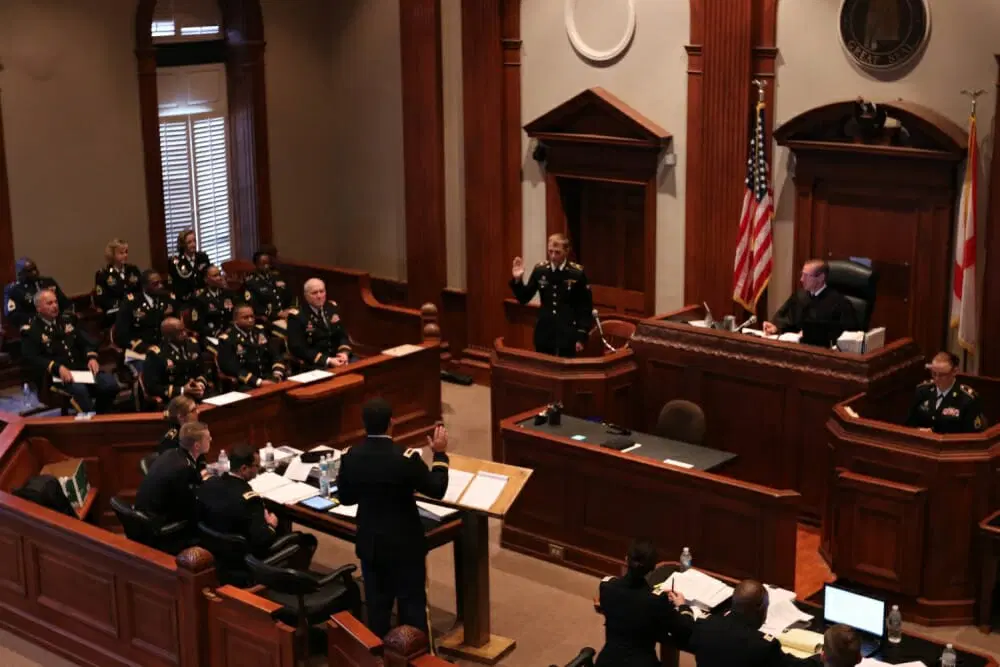
You might be feeling like your entire world shifted in a single conversation. Maybe it started with a commander pulling you aside, or a notice from legal that used words you never imagined would apply to you. Now there is talk of charges, Article 32 hearings, and a court martial, and all you can think is, “What does this mean for my career, my benefits, my family, my future?” Visit defendyourservice.com to start getting answers.
If you are facing a court martial, you are not “overreacting” by feeling scared, angry, or confused. Your rank, reputation, freedom, and even your long term earning power can all be affected. Military criminal defense is its own world, with its own rules and culture, and it is normal to feel like you are standing in the middle of a storm with no map.
Here is the short version of what you need to know. A court martial is a formal criminal trial under the Uniform Code of Military Justice. There are options before it ever gets that far. You have rights, including the right to remain silent and the right to a defense lawyer. The decisions you make early on, especially about talking to investigators and choosing counsel, can shape everything that comes next. A thoughtful approach can protect your record, your freedom, and your future opportunities.
What exactly is a court martial and why does it feel so overwhelming?
Part of what makes a court martial so frightening is that it feels unfamiliar, even to seasoned service members. You might know the culture of your unit, you might have deployed multiple times, yet suddenly you are staring at a process that sounds like a civilian criminal trial but runs under different rules.
Under the Uniform Code of Military Justice, there are different levels of courts martial, each with different maximum punishments, different panels, and different procedures. The Air Force has a clear public explanation of how these work, including summary, special, and general courts martial, which you can read in the Air Force guide to courts martial.
Because of this structure, you might wonder where your case fits. Are you looking at a minor matter being handled quickly, or a general court martial with the possibility of confinement, loss of rank, and a punitive discharge. The uncertainty alone can keep you up at night, and that stress can lead to rash decisions, like talking too freely to investigators or venting in texts that later get used as evidence.
How does the Uniform Code of Military Justice change your situation?
Another layer of pressure comes from the fact that the UCMJ is not just a copy of civilian criminal law. It reaches conduct on and off duty, and it treats some things as crimes that civilians might never face in court. Adultery, disrespect, dereliction of duty, and orders violations can all appear in a charge sheet next to more familiar accusations like assault, drug use, or theft.
You might have already discovered that everyone around you suddenly has “advice.” Some say to keep quiet. Others tell you to “cooperate fully” and “it will all go away.” The problem is that casual advice rarely lines up with the actual rules of the UCMJ. If you want a clear grounding in what the law says, not just rumors in the barracks, the article on what you should know about the UCMJ is a good starting point.
So where does that leave you. It leaves you in a place where you need two things. First, emotional steadiness so you do not make fear based choices. Second, focused information about how military court martial defense really works, including what a strong defense lawyer can do for you and what you can do for yourself.
What specific problems are you really facing right now?
When you strip away all the acronyms and procedures, the problems usually fall into three areas. Emotional, professional, and legal. Each one feeds the others, which is why this time can feel so heavy.
Emotionally, you might be dealing with shame, anger at your command, fear of letting your family down, and even isolation from your unit. You may worry about gossip, leadership trust, and how people will look at you in formation. When your identity is tied to service, the idea of being judged by your own institution cuts deep.
Professionally, you are facing questions about promotion, security clearance, and the risk of separation. A conviction at a general court martial can mean a dishonorable or bad conduct discharge, which can affect VA benefits, future employment, even the way landlords or licensing boards see you. Even a “lighter” outcome, like a federal conviction without confinement, still sits on your record.
Legally, the challenges are more technical but just as serious. Evidence might include digital messages, witness statements from within your unit, command documents, or forensic tests. Rules of evidence and procedure under the UCMJ can differ from what you may have seen on TV about civilian courts. There might be pretrial confinement issues, plea negotiations, motions to suppress evidence, or questions about unlawful command influence.
This is where a skilled court martial defense attorney can change the story. A strong defense is not only about arguing in front of a panel. It is about challenging weak evidence, exposing unfair treatment, negotiating charge reductions, and sometimes resolving a case before it reaches a full trial.
Should you try to handle this alone or rely fully on a lawyer?
You might be wondering whether you really need a criminal defense lawyer, or whether you should just trust the system and hope for the best. Maybe you are thinking about “just telling your side” to the investigator, or writing a long statement to your commander in the hope that honesty will fix everything.
To help you think more clearly, here is a comparison of approaches many service members consider when facing a court martial.
| Approach | What It Looks Like | Short Term Appeal | Serious Risks | Better Alternative |
|---|---|---|---|---|
| Handling it yourself | Talking freely to investigators, writing statements without advice, relying on friends’ stories | Feels “honest” and fast. You think it shows cooperation | You might admit to elements of an offense without realizing it. You can damage possible defenses | Speak with your appointed defense counsel before any statement. Let them guide what, if anything, you say |
| Relying only on hope | Ignoring notices, assuming “they have nothing,” or that your good record will save you | Reduces anxiety in the moment. Lets you pretend it may just go away | Missed deadlines. Weak preparation. You are surprised by evidence at the worst time | Engage early with your lawyer. Build a defense plan, even if you think the case is weak |
| Working actively with a defense lawyer | Sharing all facts with counsel, gathering records, planning for each stage of the case | Gives structure and a sense of control. You know what is coming next | Requires time, honesty, and sometimes hard choices about pleas or trial | Often leads to better outcomes. Stronger negotiations, better motion practice, and clear presentation to the panel |
For context on how military justice records are kept and how formal these cases are, you can see the Navy’s system for military justice filings and records. This is not a casual process. Your case becomes part of a permanent legal history, which is one more reason to treat your defense with care.
What immediate steps can you take to protect yourself in a court martial case?
When everything feels out of control, small but focused actions can calm your mind and strengthen your position. Here are three steps you can take right away.
- Protect your voice before you use it
Silence is not weakness. It is protection. You have the right to remain silent and the right to a lawyer. Until you have spoken in detail with a defense attorney, avoid giving written or recorded statements about the alleged incident. That includes texts, social media messages, and off the cuff “explanations” to leadership. A simple line such as “I want to cooperate, but I will follow my lawyer’s advice on any statement” is enough.
- Organize what you know and what can help you
Start gathering information that may support your defense. This can include performance evaluations, awards, emails, duty logs, medical records, and the names of witnesses who know your character or saw what really happened. Do not alter or destroy anything. Simply make a list and keep copies where your lawyer can review them. The more organized you are, the easier it is for your attorney to spot defenses or inconsistencies in the government’s story.
- Take care of your head and your support system
This process is draining. Sleep suffers, focus drops, relationships strain. You make better legal decisions when you are not running on panic. Reach out to one or two people you trust, such as a spouse, close friend, chaplain, or counselor. Tell them you are under stress and may need practical help with day to day life while you work with your lawyer. You do not need to share every detail of the case to ask for support with childcare, appointments, or simply having someone to talk to.
Where do you go from here with your military court martial defense?
You are in a hard season, and it is understandable if you feel judged before you have even had a chance to respond. Still, this is not the end of your story. You have rights. You have options. You can work with a criminal defense lawyer who understands the UCMJ and who can stand between you and the full weight of the government’s case.
The most important thing is that you do not face this alone or in silence. Reach out to qualified defense counsel, ask hard questions, and insist on clarity about every step. With the right information, a clear plan, and steady support, you can move through this process in a way that protects your dignity, your record, and as much of your future as possible.

Why Co-Managed IT Works Well for Businesses With Lean IT Departments

How Osteopathy Can Help Office Workers in Croydon

How to Challenge an Idea Without Losing Your Essay Argument

Who Can Be Held Liable for a Semi-Truck Accident?

How to Build a Case After a Slip and Fall in a Restaurant

A Resident’s Guidee Workers’ to the ChesapeakCompensation Hearing Office: What to Expect

What Does the Illinois Wrongful Death Act Cover? A Guide for Families

How To File For Divorce In California: A Practical Guide From A Family Law Attorney

How Estate Planning Differs From A Simple Will

Revolutionizing Fashion Retail: The Technical Shift to 3D Virtual Try-Ons

Who Is Jennifer Rauchet?: All You Need To Know About Pete Hegseth’s Wife

Who Is Mindy Jennings?: All You Need To Know About Ken Jennings Wife

Who Is Klarissa Munz: The Untold Story of Freddie Highmore’s Wife

Who Is Mallory Plotnik?: The Untold Story of Phil Wickham’s Wife

Can Anything Be Done About the Skyrocketing Prices of Essential Medicines?

Who Is Enrica Cenzatti?: The Untold Story of Andrea Bocelli’s Ex-Wife

Meet Christina Erika Carandini Lee?: All You Need To Know Christopher Lee’s Daughter

Who Is Jasmine Gong?: The Life and Legacy of Brad Williams Wife

Who Is Allison Butler?: The Life and Influence of Kirk Herbstreit Wife

Who Is Terrance Michael Murphy?: Everything about Audie Murphy’s Son
Why Co-Managed IT Works Well for Businesses With Lean IT Departments
How Osteopathy Can Help Office Workers in Croydon
How to Challenge an Idea Without Losing Your Essay Argument
Who Can Be Held Liable for a Semi-Truck Accident?
How to Build a Case After a Slip and Fall in a Restaurant
A Resident’s Guidee Workers’ to the ChesapeakCompensation Hearing Office: What to Expect
What Does the Illinois Wrongful Death Act Cover? A Guide for Families
How To File For Divorce In California: A Practical Guide From A Family Law Attorney
How Estate Planning Differs From A Simple Will
Revolutionizing Fashion Retail: The Technical Shift to 3D Virtual Try-Ons

 Celebrity2 years ago
Who Is Jennifer Rauchet?: All You Need To Know About Pete Hegseth’s Wife
- Celebrity2 years ago
Who Is Mindy Jennings?: All You Need To Know About Ken Jennings Wife
- Celebrity2 years ago
Who Is Klarissa Munz: The Untold Story of Freddie Highmore’s Wife
- Celebrity2 years ago
Who Is Mallory Plotnik?: The Untold Story of Phil Wickham’s Wife