Health
A Complete Guide To Professional Teeth Whitening Treatments

You might be feeling self conscious every time you smile, wondering if other people notice the stains on your teeth before they notice you. Maybe you have tried whitening toothpaste, strips, or that kit you saw online at suncreekdental.com, and the results were patchy or short lived. You want a brighter smile, but you also do not want to damage your teeth or waste money on something that will not last.
If that sounds familiar, you are not alone. Many people reach a point where they start asking whether professional teeth whitening is really worth it, what it involves, and how safe it is. The short answer is that professional whitening can safely lift stains and give a more even result than most home options, but it is important to understand what you are choosing and what it cannot fix.
This guide walks you through how professional teeth whitening treatments work, what they cost, what they feel like, and how they compare to do it yourself products. By the end, you will have a clear picture of your options, the questions to ask a dentist, and the first steps you can take today to move toward the smile you want.
Why does your smile look dull, and what makes it so frustrating?
It often starts slowly. Coffee in the morning, tea in the afternoon, maybe red wine on the weekend. Add in aging, past smoking, or certain medications, and one day you notice your teeth are more yellow than you remember. You brush more. You try whitening toothpaste. Nothing seems to make a real difference.
The emotional side can be heavier than people admit. You might avoid photos, hide your teeth when you laugh, or feel less confident at work or on dates. Because of this tension between how you feel inside and what you see in the mirror, you might wonder if professional whitening is the missing piece or just another promise that will not deliver.
Part of the frustration comes from the flood of options. There are strips, pens, LED lights, gels, trays, and in office treatments that claim dramatic results in one visit. Each one sounds like the best choice, but the price, safety, and results can vary a lot. Without clear guidance, it is hard to know where to start.
What exactly is professional whitening and how is it different from DIY?
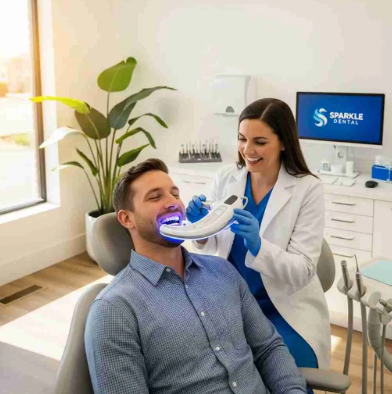
Professional whitening usually means a dentist supervised treatment that uses stronger whitening ingredients than products you can buy over the counter. There are two main approaches. In office whitening, where a dentist applies a concentrated whitening gel to your teeth, often with a protective shield on your gums. And custom take home trays, where your dentist gives you fitted trays and a whitening gel to use at home over several days or weeks.
Both approaches use peroxide based products to break down stains on and beneath the surface of the enamel. Done correctly, this can make teeth several shades lighter. The American Dental Association explains how these peroxide based systems work and what to expect in terms of results in its resource on tooth whitening and bleaching.
By contrast, most over the counter products use lower strength peroxide or only polish surface stains. They can help, especially with mild discoloration, but they usually take longer and may not reach deeper stains. Some people also experience uneven whitening because the strips or trays do not fit their teeth closely.
There are also important safety differences. A dentist will examine your mouth before whitening to check for cavities, gum disease, or exposed roots that could make whitening painful or risky. They can adjust the strength and timing to reduce sensitivity. With unsupervised DIY kits, you carry all of that risk yourself.
What are the real challenges, risks, and tradeoffs of whitening?
Even with professional care, whitening is not perfect. It does not work well on certain types of discoloration, such as gray or brown stains from some medications, or on restorations like crowns, veneers, or fillings. Those will stay the same color, which can make them stand out if your natural teeth become much lighter.
There is also the issue of sensitivity. Many people feel temporary zingers or cold sensitivity during or after whitening. This can be unsettling, especially if you already have sensitive teeth. A dentist can help you manage this with desensitizing products or by spacing out treatments, but it is still something to consider.
Financially, professional whitening costs more upfront than most over the counter products. Depending on where you live and the method used, an in office session might run from a few hundred to several hundred dollars. Custom take home trays are usually a bit less. Since whitening is considered cosmetic, insurance rarely covers it. That can create stress if you are already watching your budget.
On the other hand, chasing small improvements with one product after another can also add up in time and money. A thoughtful, dentist guided plan can sometimes save you from repeated disappointment. The key is to be clear about what you want. Are you hoping for a movie star bright result, or would you feel good with a natural, cleaner look that fits your age and features?
Public health experts also remind people to focus on safe habits alongside whitening. The Illinois Department of Public Health shares practical tips in its short guide on how to brighten your smile safely, including limiting staining foods and drinks and not overusing whitening products.
How do professional and at home options compare in real life?
So, where does that leave you when you are choosing between professional whitening and the box on the drugstore shelf? It can help to see the main differences side by side.
| Whitening Option | Typical Results | Time Frame | Cost Range | Safety & Oversight |
|---|---|---|---|---|
| In office professional whitening | Several shades lighter in one or two visits. More even result. | About 1 to 2 hours per visit. Results seen right away. | Usually higher. Often a few hundred dollars or more. | Dentist exam and monitoring. Gum and soft tissue protection. |
| Dentist provided take home trays | Gradual lightening over 1 to 3 weeks. Good control over shade. | Worn daily or nightly as instructed. Flexible schedule. | Moderate. Often less than in office but more than store kits. | Custom fit trays. Dentist guidance on strength and usage. |
| Over the counter strips or trays | Mild to moderate improvement. May be uneven on crooked teeth. | Daily use for 1 to 2 weeks or longer. | Lower. Usually under a hundred dollars. | No exam beforehand. Higher risk of misuse or irritation. |
| Whitening toothpaste and rinses | Helps remove surface stains. Maintains results, small change alone. | Used long term as part of daily routine. | Low. Similar to regular products. | Safe when used as directed. Limited whitening power. |
The American Dental Association offers a helpful overview on how to choose safe whitening products and what to discuss with a dentist in its guidance on where to start with teeth whitening. Using that kind of checklist can protect both your teeth and your wallet.
Three practical steps to move toward a brighter smile safely
- Get a dental checkup before any whitening
Before you commit to any form of whitening, schedule a routine exam and cleaning. Ask your dentist to check for cavities, gum problems, or worn enamel. Cleaning can remove surface stains and sometimes gives you a small but noticeable boost on its own. During that visit, be honest about your goals. Bring photos if there is a particular shade you like. Your dentist can tell you whether professional whitening services are likely to give you that result or if other options, such as bonding or veneers, would be more appropriate.
- Choose the method that fits your life, not just your wish list
Think about your schedule, your tolerance for sensitivity, and your budget. If you want fast results for an upcoming event and can handle a higher one time cost, in office whitening may fit. If you prefer gradual change and more control, custom take home trays can be very effective. If money is tight, you might start with a dentist approved over the counter option and a professional cleaning, then plan for cosmetic teeth whitening later. What matters is making a planned choice instead of reacting to the loudest advertisement.
- Protect your results with everyday habits
Whitening is not permanent. Stains will slowly return if you go back to the same habits. You do not have to give up everything you enjoy, but small changes help your results last longer. Rinse with water after coffee, tea, or red wine. Do not smoke or vape. Use a soft brush and fluoride toothpaste twice a day. Ask your dentist whether a whitening toothpaste is appropriate for maintenance in your situation. These simple steps can stretch the time between any future touch up treatments and protect the health of your teeth and gums.
Moving forward with more clarity and confidence
If you have been feeling stuck between wanting a brighter smile and worrying about the risks or the cost, that tension is completely understandable. Teeth are personal. They affect how you see yourself and how you show up in the world. You deserve clear information and a plan that respects both your health and your budget.
Professional teeth whitening is not magic, and it is not right for everyone, but in the right hands it can safely lift years of stains and help your smile better match how you feel inside. Your next step does not have to be a big one. Start with a checkup, ask detailed questions, and take your time choosing the approach that feels safe and realistic for you.
You are allowed to want a cleaner, brighter smile. With the right guidance and a bit of patience, you can get there in a way that feels thoughtful, not rushed, and that supports your long term oral health.

A Complete Guide To Professional Teeth Whitening Treatments

How to Evaluate a Luxury Watch Before Buying: Materials, Movement, Fit, and Long-Term Value

Why So Many UK Businesses Are Still Overpaying for Energy in 2026

Luxury Smelling Local Perfume Brands from Dubai to Try

Why B2B website projects break when branding and development are split

Business Coach Calgary: Why Every Growing Company Eventually Needs One

The Biggest Negotiation Mistakes Motorcycle Sellers Make

Teachersgram First Day Collection: Unique Teacher Apparel for Every Educator

How CherryKitten Helps You Express Your Unique Style

Chinese Technical Translation: Manufacturing & Engineering

Who Is Jennifer Rauchet?: All You Need To Know About Pete Hegseth’s Wife

Who Is Mindy Jennings?: All You Need To Know About Ken Jennings Wife

Who Is Klarissa Munz: The Untold Story of Freddie Highmore’s Wife

Who Is Mallory Plotnik?: The Untold Story of Phil Wickham’s Wife

Who Is Enrica Cenzatti?: The Untold Story of Andrea Bocelli’s Ex-Wife

Can Anything Be Done About the Skyrocketing Prices of Essential Medicines?

Meet Christina Erika Carandini Lee?: All You Need To Know Christopher Lee’s Daughter

Who Is Jasmine Gong?: The Life and Legacy of Brad Williams Wife

Who Is Allison Butler?: The Life and Influence of Kirk Herbstreit Wife

Who Is Terrance Michael Murphy?: Everything about Audie Murphy’s Son
A Complete Guide To Professional Teeth Whitening Treatments
How to Evaluate a Luxury Watch Before Buying: Materials, Movement, Fit, and Long-Term Value
Why So Many UK Businesses Are Still Overpaying for Energy in 2026
Luxury Smelling Local Perfume Brands from Dubai to Try
Why B2B website projects break when branding and development are split
Business Coach Calgary: Why Every Growing Company Eventually Needs One
The Biggest Negotiation Mistakes Motorcycle Sellers Make
Teachersgram First Day Collection: Unique Teacher Apparel for Every Educator
How CherryKitten Helps You Express Your Unique Style
Chinese Technical Translation: Manufacturing & Engineering

 Celebrity2 years ago
Who Is Jennifer Rauchet?: All You Need To Know About Pete Hegseth’s Wife
- Celebrity2 years ago
Who Is Mindy Jennings?: All You Need To Know About Ken Jennings Wife
- Celebrity2 years ago
Who Is Klarissa Munz: The Untold Story of Freddie Highmore’s Wife
- Celebrity2 years ago
Who Is Mallory Plotnik?: The Untold Story of Phil Wickham’s Wife