
Health
Does Red Light Work for Hair Loss?

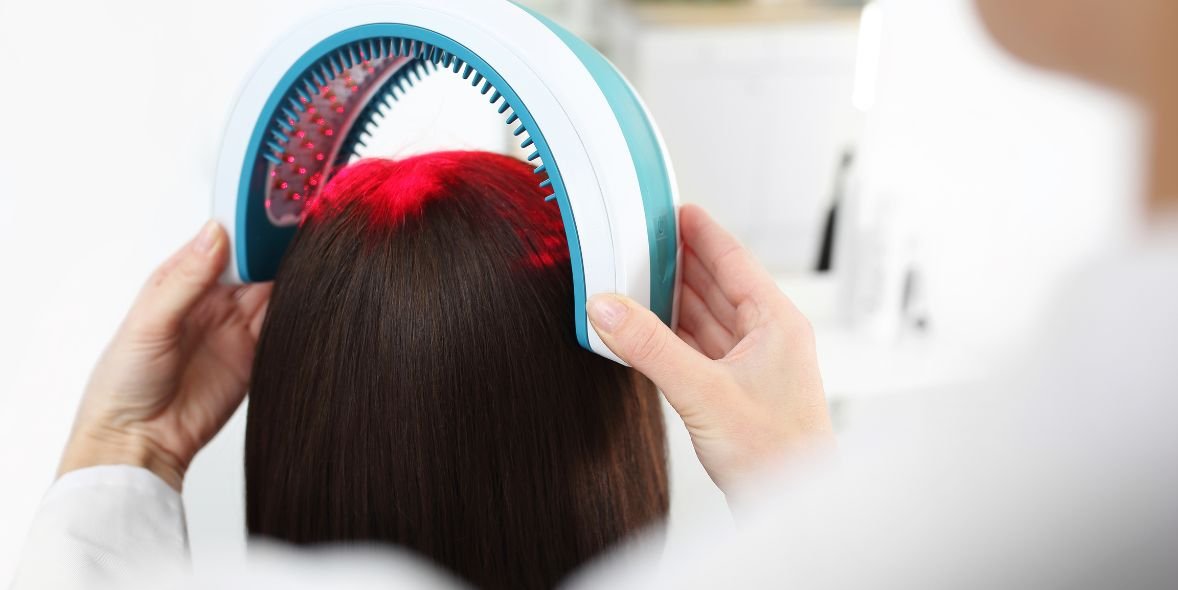
Red light therapy is FDA-cleared for treating pattern hair loss, but the clinical evidence reveals both significant benefits and important limitations. According to a 2026 prospective study published in Dermatologic Therapy, patients using helmet-type LLLT devices experienced a mean hair density increase of 25 hairs per square centimetre over 48 weeks, alongside approximately 15% improvement in hair shaft thickness.
Low-level laser therapy operates through photobiomodulation, stimulating cellular energy production in hair follicle stem cells. Multiple randomised controlled trials demonstrate measurable improvements in hair density, typically ranging from 35% to 51% compared with placebo groups after 16 weeks of consistent use. The therapy works best for androgenetic alopecia in its early to moderate stages, though it requires ongoing treatment to maintain results.
How LLLT Stimulates Hair Follicles at the Cellular Level
Low-level laser therapy targets cytochrome c oxidase within mitochondrial membranes. According to research published in the Journal of Cosmetic and Aesthetic Surgery, LLLT displaces nitric oxide from this enzyme, allowing oxygen to bond and progress through the respiratory chain to ATP production. This mechanism addresses a fundamental issue in androgenetic alopecia: compromised mitochondrial function in dermal papilla cells.
Studies examining balding dermal papilla cells reveal significantly reduced electron transport chain activity in complexes I, IV and V, alongside diminished ATP levels and metabolic uptake capacity. By restoring mitochondrial energy production, LLLT supports the stem cells that drive the hair growth cycle. The therapy specifically extends the anagen phase while shortening telogen, reversing the miniaturisation pattern characteristic of pattern hair loss.
Red light at 620-660nm wavelengths penetrates the scalp to reach follicle bulge regions. This stimulation increases blood flow to follicular structures, improving nutrient delivery whilst reducing inflammatory signalling. The combined effect of enhanced cellular energy, improved circulation and reduced inflammation creates an environment conducive to hair regrowth, particularly in follicles that have entered dormancy rather than permanent destruction.
Clinical Trial Evidence: What the Numbers Actually Mean
A systematic review and meta-analysis of seven double-blind randomised controlled trials found a standardised mean difference of 1.27 for hair density improvements in LLLT-treated groups versus sham controls. Breaking down individual studies provides clearer context for these aggregate findings.
In a 24-week randomised controlled trial involving Thai patients, LLLT at 655nm achieved a 37% increase in hair counts compared with sham-treated controls. Female participants receiving red light therapy showed particularly strong responses, with hair density improvements observable from week 12 onwards. The same study noted that helmet-type devices produced more consistent coverage than comb-style applicators.
According to a large observational study tracking over 1,300 users of helmet-type LLLT devices, approximately 80% reported clinical effectiveness after several months of regular use. However, this self-reported data should be weighted differently than controlled trial outcomes. Objectively measured improvements typically appear more modest, with hair counts increasing by 15-30 hairs per square centimetre in most studies.
| Study Type | Duration | Hair Density Increase | Treatment Frequency |
| RCT – Thai Population | 24 weeks | 37% vs sham | 3x weekly, 25 min |
| Prospective – Helmet Device | 48 weeks | 25 hairs/cm² | Daily or alternate days |
| Meta-analysis (7 trials) | 12-24 weeks | 35-51% range | Varied protocols |
| Observational – Home Devices | 3-6 months | 80% self-reported improvement | 3-4x weekly |
These findings indicate consistent positive effects across different populations and device types, though individual responses vary considerably. The clinical significance of a 25-30% density increase depends on baseline hair count and distribution patterns.
LLLT Compared to Established Hair Loss Treatments
Recent meta-analyses comparing LLLT to topical minoxidil reveal interesting patterns. According to research published through March 2025 examining seven randomised controlled trials, combination therapy with LLLT plus minoxidil produced superior outcomes to either treatment alone. This suggests complementary rather than competing mechanisms of action.
Minoxidil works primarily as a potassium channel opener, prolonging the anagen phase through different pathways than photobiomodulation. The drug typically shows efficacy in 40-60% of users, with hair density improvements emerging around the 16-week mark. LLLT demonstrates similar response rates but with a potentially better safety profile and no chemical exposure concerns.
Unlike finasteride, LLLT does not interfere with DHT conversion. This represents both an advantage and limitation. Patients avoiding 5-alpha reductase inhibitors due to side effect concerns can use LLLT safely, but those requiring DHT suppression will need additional interventions. The non-invasive nature of red light therapy makes it suitable for patients unwilling to commit to surgical procedures like FUE hair transplants, though transplantation remains the only option for completely bald areas.
Stanford Medicine researchers note that when patients discontinue LLLT, the benefits typically reverse within several months. This contrasts with hair transplantation, which provides permanent follicular relocation. The ongoing commitment required for LLLT represents a significant practical consideration for treatment planning.
| Treatment | Mechanism | Efficacy Rate | Onset of Results | Maintenance Required |
| LLLT | Photobiomodulation, ATP production | 35-51% density increase | 12-16 weeks | Ongoing use essential |
| Minoxidil 5% | Potassium channel opening | 40-60% response rate | 16-24 weeks | Twice daily application |
| Finasteride | 5-alpha reductase inhibition | 60-80% stabilisation | 3-6 months | Daily oral medication |
| FUE Transplant | Follicular relocation | 90-95% graft survival | 3-12 months | None (permanent) |
The most effective approach often involves combining treatments that address different aspects of hair loss pathophysiology. LLLT pairs particularly well with topical treatments and can support post-transplant healing.
Device Types and Treatment Protocols That Actually Work
FDA-cleared LLLT devices include helmets, caps, combs and panel systems. According to the systematic review published in the Journal of Clinical and Aesthetic Dermatology, helmet-type devices demonstrate superior efficacy to handheld combs, likely due to improved scalp coverage and consistent positioning.
Effective protocols typically specify 10-20 minutes per session, 3-4 times weekly. The CurrentBody LED Hair Regrowth Helmet, rated 4.6 stars across 108 reviews, uses 660nm wavelength and requires 10-minute sessions. According to manufacturer claims, users experienced a 123% increase in hair growth rate over 12 weeks, though independent verification of this specific figure is not available in peer-reviewed literature.
LLLT is effective for treating:
- Androgenetic alopecia (male and female pattern hair loss)
- Telogen effluvium in early stages
- Menopausal hair thinning
- Areas with existing vellus hairs or follicular miniaturisation
LLLT is not effective for treating:
- Completely bald areas with no remaining follicles
- Scarring alopecia where follicular structures are destroyed
- Hair loss from systemic diseases requiring medical management
- Rapid-onset alopecia areata (autoimmune condition)
The distinction between areas with miniaturised follicles and truly bald regions matters significantly. Red light therapy can potentially reactivate dormant follicles but cannot regenerate destroyed follicular structures. Patients with extensive baldness typically achieve better results with hair transplant procedures that relocate healthy follicles from donor zones.
Device selection should prioritise wavelength specifications between 620-670nm, adequate LED or laser diode count for scalp coverage, and FDA clearance status. Budget options under £100 typically use fewer light sources and may require longer treatment times to achieve comparable photon delivery.
Who Benefits Most and Who Should Look Elsewhere
According to research from UCLA Health and Western Reserve Dermatology, LLLT works best for individuals in the early to moderate stages of androgenetic alopecia. The Norwood-Hamilton scale provides useful guidance: patients at stages II-IV typically respond better than those at stage VI or VII where extensive baldness has occurred.
Women with Ludwig scale I-II female pattern hair loss show particularly strong responses to red light therapy. The 2026 prospective study noted that female participants experienced more consistent improvements in hair density compared to male subjects, possibly due to differences in miniaturisation patterns and scalp thickness.
Age appears to influence outcomes, though the mechanism remains unclear. Patients under 40 years with recent-onset thinning demonstrate better responses than older individuals with long-established baldness. This may reflect follicular viability rather than chronological age itself. A hair follicle dormant for two years has better reactivation potential than one inactive for two decades.
Realistic expectations matter considerably. According to dermatologist Dr Sam Ellis in a clinical review, “Red light therapy is not a gimmick, it works in several different ways including energising hair follicles and increasing blood flow to the scalp. But patients need to understand this is a management therapy, not a cure.” The therapy slows progression and may partially reverse thinning, but will not restore juvenile hairlines in most cases.
Patients who should prioritise other treatments include those with rapidly progressing hair loss requiring aggressive intervention, individuals unable to commit to ongoing device use, and those with complete baldness in target areas. These candidates typically achieve better outcomes with pharmaceutical approaches, transplantation, or combination protocols designed by hair restoration specialists.
The Science Behind Wavelength and Penetration Depth
Not all red light delivers equivalent therapeutic effects. The optimal wavelength range for hair growth stimulation sits between 620-670 nanometres, with 655nm representing the most frequently studied specification. According to research on photobiomodulation mechanisms, this wavelength range balances tissue penetration depth with cytochrome c oxidase absorption.
At wavelengths below 620nm, scalp penetration becomes insufficient to reach follicular bulge regions. Above 670nm, absorption by target chromophores decreases, reducing therapeutic effectiveness. The 660nm wavelength used in many commercial devices represents an evidence-based compromise between these constraints.
Laser diodes versus LED arrays represents another specification consideration. The meta-analysis published in PMC examining FDA-approved devices found no significant efficacy differences between laser and LED systems when photon density remained comparable. Laser devices typically deliver more focused energy but cover smaller areas, whilst LED arrays provide broader coverage with potentially less precise targeting.
Energy density, measured in joules per square centimetre, influences treatment outcomes alongside wavelength. Effective protocols typically deliver 2-6 J/cm² per session. Devices specifying power output in milliwatts require calculation to determine actual energy density based on treatment duration and scalp coverage area.
The interaction between red light and scalp tissue involves multiple physical processes. Initial absorption by cytochrome c oxidase triggers the mitochondrial response. Secondary effects include modulation of reactive oxygen species signalling and nitric oxide pathways. These cascading effects explain why improvements continue developing over weeks rather than appearing immediately after exposure.
Safety Profile and Realistic Expectations from the Literature
Adverse effects from LLLT remain rare across published trials. The systematic review examining over 1,300 device users noted that side effects were “very rare and generally limited to mild skin or scalp irritation.” No serious adverse events have been reported in controlled trials using FDA-cleared devices at recommended parameters.
This safety profile contrasts favourably with pharmaceutical hair loss treatments. Finasteride carries a risk of sexual dysfunction in approximately 2-4% of users, whilst minoxidil can cause scalp irritation, unwanted facial hair growth and, rarely, cardiovascular effects. LLLT avoids systemic exposure entirely, making it suitable for patients with contraindications to medical therapy.
The non-ionising nature of red light at 620-670nm means no radiation damage risk exists. Unlike UV exposure, which causes DNA damage and increases skin cancer risk, red and near-infrared wavelengths lack sufficient energy to break molecular bonds. Long-term safety data spanning several years shows no cumulative toxicity or tissue damage.
However, the requirement for ongoing treatment represents a practical limitation rather than a safety concern. According to Stanford Medicine’s 2025 analysis, “When the person stops applying red light, the effects stop.” This creates a permanent commitment rather than a finite treatment course. Patients must weigh the time investment of 30-60 minutes weekly against expected outcomes.
Realistic outcome expectations should be grounded in clinical trial data rather than marketing claims. A 25-35% increase in hair density over 6-12 months represents a typical strong response. This might translate to visibly thicker coverage in areas with diffuse thinning but will not transform extensive baldness into full density. Patient satisfaction correlates most strongly with accurate pre-treatment counselling about likely outcomes.
Frequently Asked Questions
How long does it take to see results from red light therapy for hair loss?
According to multiple randomised controlled trials, initial improvements typically emerge around 12-16 weeks of consistent use. The 2026 prospective study tracking patients over 48 weeks found that hair density improvements appeared gradually, with maximal benefits achieved between 6-12 months. Dr Aleksandra Brown notes in her LED therapy review that patience is essential, as cellular changes at the follicular level precede visible density improvements by several weeks.
Can LLLT regrow hair in completely bald areas?
No. Red light therapy requires viable follicular structures to stimulate. Completely bald areas where follicles have been destroyed through scarring or prolonged miniaturisation will not respond to photobiomodulation. According to research from Haber Dermatology, LLLT “works best for people in the early stages of hair thinning” where follicles remain present but have entered dormancy or produced progressively finer hair shafts.
Is red light therapy as effective as minoxidil for hair growth?
Clinical comparisons suggest similar efficacy rates of 35-51% for LLLT versus 40-60% for minoxidil 5%. A meta-analysis published in January 2025 found that combination therapy with both treatments produced superior outcomes to either alone, indicating complementary mechanisms. LLLT offers advantages in safety profile and absence of chemical application, whilst minoxidil provides a pharmaceutical option for patients unable to commit to device use.
What is the difference between LLLT and standard red light therapy?
Low-level laser therapy represents a specific application of red light within the 620-670nm wavelength range at controlled energy densities. Standard red light therapy encompasses broader applications including skin rejuvenation and wound healing, often using different parameters. For hair growth specifically, LLLT protocols have been validated in clinical trials, whilst generic red light panels may not deliver appropriate specifications for follicular stimulation.
Do you need to use LLLT forever to maintain results?
Yes. According to Stanford Medicine researchers, discontinuing treatment typically results in gradual return to baseline within several months. The therapy maintains an improved environment for follicular function but does not permanently alter the underlying androgenetic alopecia process. This differs from hair transplantation, which relocates follicles to create permanent changes in hair distribution.

Seedance 2.0 Makes AI Video Feel More Operational

Does Red Light Work for Hair Loss?

Anti-Aging Skincare for Men: When to Start and What Works

Revitalize Your Skin with an Ultrasonic Skin Spatula: Tips & Benefits

Six AI Music Tools Transforming Ideas Into Usable Tracks

Planning, Building Regulations, and More for Loft Conversions in Essex

Moving to Teesside Key Things to Consider

High-Flying Visibility: Why Totally Branded Balloons are the Best Way to Draw a Crowd

Soul App Releases Women’s Day Report: Gen Z Prioritizes Inner Balance

Can a Multi Store Inventory Management Plugin Improve Order Accuracy?

Who Is Jennifer Rauchet?: All You Need To Know About Pete Hegseth’s Wife

Who Is Mindy Jennings?: All You Need To Know About Ken Jennings Wife

Who Is Enrica Cenzatti?: The Untold Story of Andrea Bocelli’s Ex-Wife

Who Is Klarissa Munz: The Untold Story of Freddie Highmore’s Wife

Who Is Mallory Plotnik?: The Untold Story of Phil Wickham’s Wife

Meet Christina Erika Carandini Lee?: All You Need To Know Christopher Lee’s Daughter

Who Is Allison Butler?: The Life and Influence of Kirk Herbstreit Wife

Who Is Terrance Michael Murphy?: Everything about Audie Murphy’s Son

Alec Bohm Wife: Everything You Need to Know About Jacque Darby

Who Is Jessica Marie Blosil?: Everything About Marie Osmond’s Daughter
Seedance 2.0 Makes AI Video Feel More Operational
Does Red Light Work for Hair Loss?
Anti-Aging Skincare for Men: When to Start and What Works
Revitalize Your Skin with an Ultrasonic Skin Spatula: Tips & Benefits
Six AI Music Tools Transforming Ideas Into Usable Tracks
Planning, Building Regulations, and More for Loft Conversions in Essex
Moving to Teesside Key Things to Consider
High-Flying Visibility: Why Totally Branded Balloons are the Best Way to Draw a Crowd
Soul App Releases Women’s Day Report: Gen Z Prioritizes Inner Balance
Can a Multi Store Inventory Management Plugin Improve Order Accuracy?
-
 Celebrity1 year ago
Who Is Jennifer Rauchet?: All You Need To Know About Pete Hegseth’s Wife
-
 Celebrity1 year ago
Who Is Mindy Jennings?: All You Need To Know About Ken Jennings Wife
-
 Celebrity1 year ago
Who Is Enrica Cenzatti?: The Untold Story of Andrea Bocelli’s Ex-Wife
-
 Celebrity2 years ago
Who Is Klarissa Munz: The Untold Story of Freddie Highmore’s Wife