
Tech
How Child Care Centers Improve Outdoor Learning Spaces

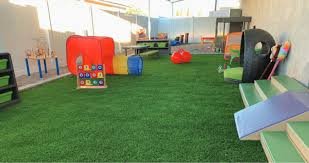
When we think about early childhood education, images of colorful classrooms, finger painting, and circle time often spring to mind. Yet, a significant portion of a child’s development happens outside those four walls. The outdoors is a dynamic classroom, offering sensory experiences and physical challenges that indoor environments simply cannot replicate.
For child care centers, the outdoor space isn’t just a place to “burn off energy.” It is a critical extension of the learning environment. By thoughtfully designing these areas, educators can foster creativity, resilience, and social skills in young learners. It’s about moving beyond the standard metal slide and swing set to create immersive environments that spark curiosity.
This shift towards better outdoor design is gaining momentum. Centers are looking for ways to blend nature, play, and education into a cohesive experience. Let’s explore how modern child care facilities are transforming their yards into thriving outdoor learning spaces.
The Shift from Recess to Learning
Historically, outdoor time was viewed largely as a break for both teachers and students. It was unstructured time for physical activity. While physical play remains crucial, the philosophy has evolved. Educators now recognize that “play” is the primary method of learning for young children.
When the outdoor environment is designed with intention, play becomes richer. A pile of dirt becomes a construction site; a garden bed becomes a science lab. Child care centers are now auditing their outdoor spaces to ensure they offer diverse opportunities for development. This includes physical challenges, quiet spaces for reflection, areas for social interaction, and zones for creative expression.
Integrating Nature into Play
One of the most effective ways centers are improving these spaces is by bringing nature back into the equation. Concrete and rubber matting are being replaced or supplemented with natural elements.
Sensory Gardens
Small gardens are appearing in play yards, filled with plants chosen for their texture, smell, and visual appeal. Lamb’s ear (soft and fuzzy), mint (fragrant), and sunflowers (visually striking) allow children to engage their senses directly. These gardens teach responsibility as children help water and care for the plants, while also introducing basic biological concepts.
Natural Materials
Instead of exclusively plastic structures, centers are incorporating logs for balancing, tree stumps for seating, and loose parts like pinecones and stones for building. These materials have open-ended uses. A plastic car is always a car, but a stick can be a wand, a spoon, or a fishing pole. This ambiguity forces children to use their imagination and encourages cognitive flexibility.
Zoning for Diverse Activities
A well-designed outdoor space caters to different energy levels and interests. Just as an indoor classroom has a reading nook and a block corner, outdoor spaces are being “zoned” to support various types of play.
Active Zones
These areas support gross motor skills—running, climbing, and jumping. This is where you might find traditional equipment, but often with a twist. For example, some facilities are installing climbing walls or obstacle courses that require problem-solving to navigate.
Creative and Messy Zones
Mud kitchens have become incredibly popular. These simple setups—often just a wooden counter with metal bowls and access to dirt and water—allow for messy, sensory-rich play. Children “cook,” mix, and experiment with textures. It’s messy, yes, but it builds fine motor skills and introduces concepts of volume and mixture.
Quiet Retreats
Not every child wants to run around for an hour. Overstimulation is real, even outdoors. Centers are creating quiet zones—perhaps a willow hut, a small tent, or a bench under a shade tree—where children can retreat to read, observe, or simply breathe. These spaces support emotional regulation and provide a sanctuary for introverted learners.
Customization and Local Identity
Every child care center has a unique culture and geographic context, and outdoor spaces are beginning to reflect that. A center in the desert might focus on sand and rock exploration, while one in a rainy climate might embrace water play and puddle jumping.
This is where specialized design comes into play. Facilities are increasingly seeking out tailored solutions to fit their specific terrain and climate. For instance, custom playgrounds in Idaho might incorporate elements that reflect the rugged, mountainous landscape, using timber and stone to mimic the local environment. By customizing the space, centers create a stronger sense of place and identity for the children, making the learning environment feel relevant and grounded.
Safety and Accessibility
Improving outdoor spaces also means making them accessible to every child. Inclusive design ensures that children of all physical abilities can participate. This goes beyond just wheelchair ramps.
Centers are installing sensory panels at various heights, ensuring pathways are wide and smooth, and creating transfer stations on slides so children with mobility aids can play alongside their peers. Ground surfacing is also a major consideration; engineered wood fiber or pour-in-place rubber provides safety from falls while remaining navigable.
Safety doesn’t mean removing all risk, however. “Risky play”—like climbing a little higher or balancing on a log—is essential for building confidence. The goal is to remove hazards (unexpected dangers like a broken railing) while keeping risks (challenges a child can navigate) intact.
The Role of Educators Outdoors
Finally, the physical improvement of the space is paired with a shift in teaching strategy. Teachers are being trained to be facilitators outdoors, rather than just supervisors.
Instead of standing back and watching, educators are encouraged to engage. If a child finds a bug, the teacher might provide a magnifying glass and ask questions. If a group is building a fort, the teacher might supply extra materials to extend the play. The improved outdoor space provides the tools, but the educator provides the scaffolding that turns play into deep learning.
Creating a Future of Outdoor Exploration
The trend is clear: the days of the barren asphalt playground are numbered. Child care centers are realizing that the outdoors is a resource waiting to be tapped. By integrating nature, zoning for variety, ensuring inclusivity, and customizing equipment to fit their specific needs, these centers are enriching the lives of the children they serve.
These improvements do more than just make a facility look attractive to prospective parents. They build stronger bodies, sharper minds, and happier children. When a child steps outside, they shouldn’t be stepping away from learning; they should be stepping into a world of it.

Why Preventive Dental Planning Matters For Households

Why Parasite Prevention Is A Central Focus In Veterinary Clinics

Common Mistakes People Make When Buying Paneer Cheese

7 Smart Reasons Designer Radiators Are Becoming a Must-Have in Modern UK Homes

Heavy Towing Near Me: Fast, Safe, and Reliable Solutions for Heavy-Duty Vehicle Recovery

From Messaging App to Digital Ecosystem: The Evolution of Telegram

The Future of Money Is Not Cashless — It’s Frictionless

Chinese Furniture Manufacturers: Why OPPEIN Stands Out Globally

Hire Vetted Data Scraping Experts to Power Your Business Intelligence in 2026

The London Brands Setting Global Fashion Standards

Who Is Jennifer Rauchet?: All You Need To Know About Pete Hegseth’s Wife

Who Is Mindy Jennings?: All You Need To Know About Ken Jennings Wife

Who Is Enrica Cenzatti?: The Untold Story of Andrea Bocelli’s Ex-Wife

Who Is Klarissa Munz: The Untold Story of Freddie Highmore’s Wife

Who Is Mallory Plotnik?: The Untold Story of Phil Wickham’s Wife

Meet Christina Erika Carandini Lee?: All You Need To Know Christopher Lee’s Daughter

Who Is Allison Butler?: The Life and Influence of Kirk Herbstreit Wife

Who Is Terrance Michael Murphy?: Everything about Audie Murphy’s Son

Alec Bohm Wife: Everything You Need to Know About Jacque Darby

Who Is Jessica Marie Blosil?: Everything About Marie Osmond’s Daughter
Why Preventive Dental Planning Matters For Households
Why Parasite Prevention Is A Central Focus In Veterinary Clinics
Common Mistakes People Make When Buying Paneer Cheese
7 Smart Reasons Designer Radiators Are Becoming a Must-Have in Modern UK Homes
Heavy Towing Near Me: Fast, Safe, and Reliable Solutions for Heavy-Duty Vehicle Recovery
From Messaging App to Digital Ecosystem: The Evolution of Telegram
The Future of Money Is Not Cashless — It’s Frictionless
Chinese Furniture Manufacturers: Why OPPEIN Stands Out Globally
Hire Vetted Data Scraping Experts to Power Your Business Intelligence in 2026
The London Brands Setting Global Fashion Standards
-
 Celebrity1 year ago
Who Is Jennifer Rauchet?: All You Need To Know About Pete Hegseth’s Wife
-
 Celebrity1 year ago
Who Is Mindy Jennings?: All You Need To Know About Ken Jennings Wife
-
 Celebrity1 year ago
Who Is Enrica Cenzatti?: The Untold Story of Andrea Bocelli’s Ex-Wife
-
 Celebrity2 years ago
Who Is Klarissa Munz: The Untold Story of Freddie Highmore’s Wife