
Business
THACO INDUSTRIES as Global Steel Furniture Manufacturers

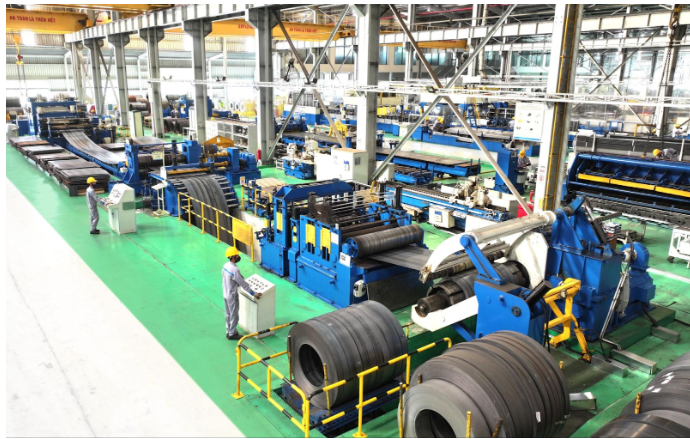
With strong capabilities in precision engineering and metal fabrication, THACO INDUSTRIES is a well-established steel furniture manufacturers in Vietnam, providing OEM and ODM solutions for international markets. Through automated fabrication, advanced surface finishing, and strict quality management, the corporation delivers steel furniture that meets stringent requirements for durability, aesthetic quality, and long-term performance in commercial and industrial environments.
Understanding Steel Furniture Manufacturing
Steel furniture manufacturing covers the design, fabrication, and finishing of steel furniture products. In modern offices, warehouses, and commercial facilities, steel furniture plays a critical role due to its high load-bearing capacity, durability, and flexibility in form and finish, making it suitable for both functional infrastructure and design-oriented applications.
Common Materials Used in Steel Furniture
Steel furniture manufacturers select materials based on load requirements, corrosion exposure, and design intent:
- Carbon Steel: Widely used for frames, legs, cabinets, and shelving structures due to its strength, ease of forming, and cost efficiency.
- Stainless Steel: Grades such as SUS304 and SUS316 provide excellent resistance to corrosion and staining, making them suitable for kitchens, premium interiors, railings, and outdoor or coastal environments.
- Galvanized Steel: Zinc-coated steel provides enhanced long-term rust protection and is commonly applied in outdoor furniture, electrical cabinets, and industrial storage systems.
- Alloy Steel: Alloyed with elements such as chromium, nickel, or molybdenum to increase strength-to-weight ratio and mechanical performance..
- Powder-Coated Steel: Typically carbon steel finished with electrostatic powder coating, providing corrosion resistance, wear durability, and refined aesthetics for office furniture, lockers, racks, and decorative products.
The integration of these materials allows steel furniture manufacturers to balance durability, corrosion resistance, and design flexibility across diverse applications.
Manufacturing Processes and Engineering Approach
The performance and service life of steel furniture are strongly influenced by material selection and fabrication techniques. Manufacturers must align mechanical properties, surface protection methods, and production efficiency with specific project specifications.
Steel Grades and Material Selection
Carbon steel grades are selected according to forming capability and load-bearing requirements.
- Low-carbon steel offers excellent weldability, making it suitable for tube frames and sheet metal parts.
- Medium-carbon steel provides higher tensile strength, supporting applications requiring increased load-bearing components.
Cold-rolled steel is preferred when tighter tolerances and smoother surfaces are required, while hot-rolled steel is applied where dimensional precision is less critical.
For corrosion-prone environments, stainless steel grades are selected accordingly:
- Grade 304 suits indoor and general-use conditions.
- Grade 316, containing molybdenum, resists chloride exposure in coastal or food-processing environments.
Galvanized coatings typically follow G90 or Z275 standards, ensuring consistent corrosion protection based on expected service conditions.
Fabrication and Finishing Operations
Steel furniture manufacturing integrates multiple metalworking processes into a controlled and standardized production flow:
- Cutting: Raw coils or plates are processed using CNC laser cutting services, plasma cutting, or mechanical shearing. Laser cutting enables high-precision profiles for cabinet panels and structural components.
- Bending and Forming: Press brakes form sheet metal into angles, channels, and box sections, while roll bending forms cylindrical or curved components.
- Welding: MIG welding is applied for efficient joining of carbon steel components, whereas TIG welding ensures clean, low-distortion joints on stainless steel surfaces where appearance is critical.
- Surface Preparation: Grinding, deburring, and chemical cleaning remove oils and contaminants, ensuring proper coating adhesion.
- Surface Finishing: Powder coating is widely applied, creating a durable protective layer with a typical thickness of 60 – 80 microns, offering strong chip resistance and color consistency.
Quality Control and Process Monitoring
Quality checkpoints are embedded throughout production:
- Dimensional accuracy verification after cutting (typically ±0.5 mm)
- Weld inspection through visual checks and penetrant testing
- Coating thickness measurement using electromagnetic gauges
- Load testing to validate rated capacity and safety factors
Statistical process control (SPC) is applied to monitor defect rates and maintain consistent output across production batches.
Steel Furniture Product Categories
Steel furniture manufacturers serve a wide range of functional environments through diverse product lines.
Office and Commercial Furniture
Office furniture combines structural stability with professional aesthetics.
Desks and workstations typically feature powder-coated steel frames, while filing cabinets use cold-rolled steel drawers equipped with ball-bearing slides rated at 35 – 50 kg per drawer.
Shelving systems range from light-duty office storage to medium-duty archival solutions with boltless, adjustable designs.
Corten steel planters and architectural elements are increasingly used in atriums and outdoor spaces, offering long-term durability with minimal maintenance over a 20–30 year service life.
Industrial and Storage Furniture
Industrial environments require furniture engineered for heavy loads and continuous operation.
Workbenches utilize reinforced steel tops and box-section frames capable of supporting loads up to 500 kg.
Locker systems and warehouse racks employ heavy-gauge steel, with adjustable shelving designed to support 300 – 1000 kg per level.
Mobile equipment stands integrate steel frames with heavy-duty casters for flexible factory layouts.
Custom Steel Furniture Solutions
Custom projects address unique dimensional, load, or environmental requirements.
Engineering teams develop CAD models and apply structural analysis to validate performance before prototyping.
Production volumes range from small batches of 50 units to large-scale rollouts exceeding 5,000 units, supported by flexible manufacturing systems.
Benefits of Working with a Reliable Steel Furniture Manufacturer
Consistent Quality and Long-Term Durability
Established manufacturers maintain material full traceability from raw steel receipt through to finished product shipment.
Durability is verified through corrosion testing, weld inspection, and load testing at 150 – 200% of rated capacity, ensuring adequate safety margins under real-world operating conditions.
Cost Efficiency and Production Flexibility
Efficient operations enable manufacturers to handle both custom projects and high-volume production within a single supply system.
Material optimization programs reduce waste through nesting software, scrap reuse, and impacting, significantly lowering project costs where steel accounts for 30 – 40% of total expenses.
Lead time control is achieved through safety stock of standard materials and in-house finishing capabilities, avoiding delays of 7 – 14 days commonly associated with outsourced processes.
Export-oriented logistics planning further supports on-time delivery through optimized container loading and consolidated shipments.
Compliance and Safety Assurance
Certified quality systems such as ISO 9001 ensure controlled production and continuous improvement.
Material compliance documentation supports REACH, RoHS, and California Proposition 65 requirements.
Product testing follows recognized standards including BIFMA and relevant EN norms for office and storage furniture.
Safety considerations, such as rounded edges, stability against tipping, and secure panel fixing are incorporated during design to minimize operational risks.
THACO INDUSTRIES – Your Trusted Steel Furniture Manufacturing Partner
THACO INDUSTRIES operates an integrated manufacturing system covering the full production process, from Research & Development (R&D), fabrication, and welding to surface treatment & painting, assembly, quality control, packaging, and logistics. The corporation supports commercial, industrial, and institutional clients with engineered steel furniture solutions tailored to defined load, durability, and application-specific performance requirements.

THACO INDUSTRIES – Your Trusted Steel Furniture Manufacturing Partner
Production capabilities include CNC laser cutting, automated bending systems, robotic welding, and high-capacity powder coating lines, enabling scalable manufacturing from prototype development to high-volume, multi-thousand-unit production programs.
In-house engineering teams provide design consultation, structural analysis, and prototype validation to ensure manufacturability and performance prior to mass production. Proven export experience, including the supply of Corten steel planters to the U.S. market, demonstrates the corporation’s capability in specialized metal fabrication and international logistics management.
By integrating consultation, engineering, production, finishing, and delivery under unified project management, THACO INDUSTRIES delivers reliable steel furniture solutions for global applications.
Website: https://thacoindustries.com/en/
Contact: (+84) 348 620 063
Email: partsales@thaco.com.vn

Medical Device Prototyping Services: Faster Development Without Compromising Quality

How to Extend the Lifespan of Industrial Hydraulic Components

How On-Demand Delivery Can Double Your Sales

The Vital Role Of General Dentistry In Lifelong Oral Health

How to Choose the Right Mousepad desk mats for Your Desk Layout

How Rocket Canopy Windproof Walls Protect Your Booth in Harsh Weather

Why Preventive Dental Planning Matters For Households

Why Parasite Prevention Is A Central Focus In Veterinary Clinics

Common Mistakes People Make When Buying Paneer Cheese

7 Smart Reasons Designer Radiators Are Becoming a Must-Have in Modern UK Homes

Who Is Jennifer Rauchet?: All You Need To Know About Pete Hegseth’s Wife

Who Is Mindy Jennings?: All You Need To Know About Ken Jennings Wife

Who Is Enrica Cenzatti?: The Untold Story of Andrea Bocelli’s Ex-Wife

Who Is Klarissa Munz: The Untold Story of Freddie Highmore’s Wife

Who Is Mallory Plotnik?: The Untold Story of Phil Wickham’s Wife

Meet Christina Erika Carandini Lee?: All You Need To Know Christopher Lee’s Daughter

Who Is Allison Butler?: The Life and Influence of Kirk Herbstreit Wife

Who Is Terrance Michael Murphy?: Everything about Audie Murphy’s Son

Alec Bohm Wife: Everything You Need to Know About Jacque Darby

Who Is Jessica Marie Blosil?: Everything About Marie Osmond’s Daughter
Medical Device Prototyping Services: Faster Development Without Compromising Quality
How to Extend the Lifespan of Industrial Hydraulic Components
How On-Demand Delivery Can Double Your Sales
The Vital Role Of General Dentistry In Lifelong Oral Health
How to Choose the Right Mousepad desk mats for Your Desk Layout
How Rocket Canopy Windproof Walls Protect Your Booth in Harsh Weather
Why Preventive Dental Planning Matters For Households
Why Parasite Prevention Is A Central Focus In Veterinary Clinics
Common Mistakes People Make When Buying Paneer Cheese
7 Smart Reasons Designer Radiators Are Becoming a Must-Have in Modern UK Homes
-
 Celebrity1 year ago
Who Is Jennifer Rauchet?: All You Need To Know About Pete Hegseth’s Wife
-
 Celebrity1 year ago
Who Is Mindy Jennings?: All You Need To Know About Ken Jennings Wife
-
 Celebrity1 year ago
Who Is Enrica Cenzatti?: The Untold Story of Andrea Bocelli’s Ex-Wife
-
 Celebrity2 years ago
Who Is Klarissa Munz: The Untold Story of Freddie Highmore’s Wife