
Life Style
The Art of the “Stop-and-Stare”: Why Commercial Holiday Decor is More Than Just Fluff

Let’s be honest for a second. As property managers or city planners, when December rolls around, we aren’t just trying to spread Christmas cheer. We’re trying to solve a very palpable problem: silence.
There is nothing quite as disheartening as a quiet shopping center or an empty hotel lobby during the busiest season of the year. In an era where everyone can buy everything from their sofa, the physical spaces we manage are facing an identity crisis.
Why should people come to us? The answer isn’t just “more sales.” The answer is a feeling. It’s that visceral moment when a family walks around a corner and collectively gasps because they see something spectacular.
That moment doesn’t happen by accident. As we look ahead to the 2026 season, here is an insider’s take on the real business of commercial holiday magic—the sweat, the engineering, and the psychology behind those giant displays.
It’s Not About Looking; It’s About Step-Inside
Remember the old days? A nice tree in the center of the atrium, maybe surrounded by a little white fence. People looked at it, nodded, and kept walking. That era is dead.
Today, if your decoration is passive, it’s failing. We are living in the experience economy. People don’t want to just see the holiday; they want to be in it. This is why we’re seeing such massive demand for what I call “immersion architecture.”
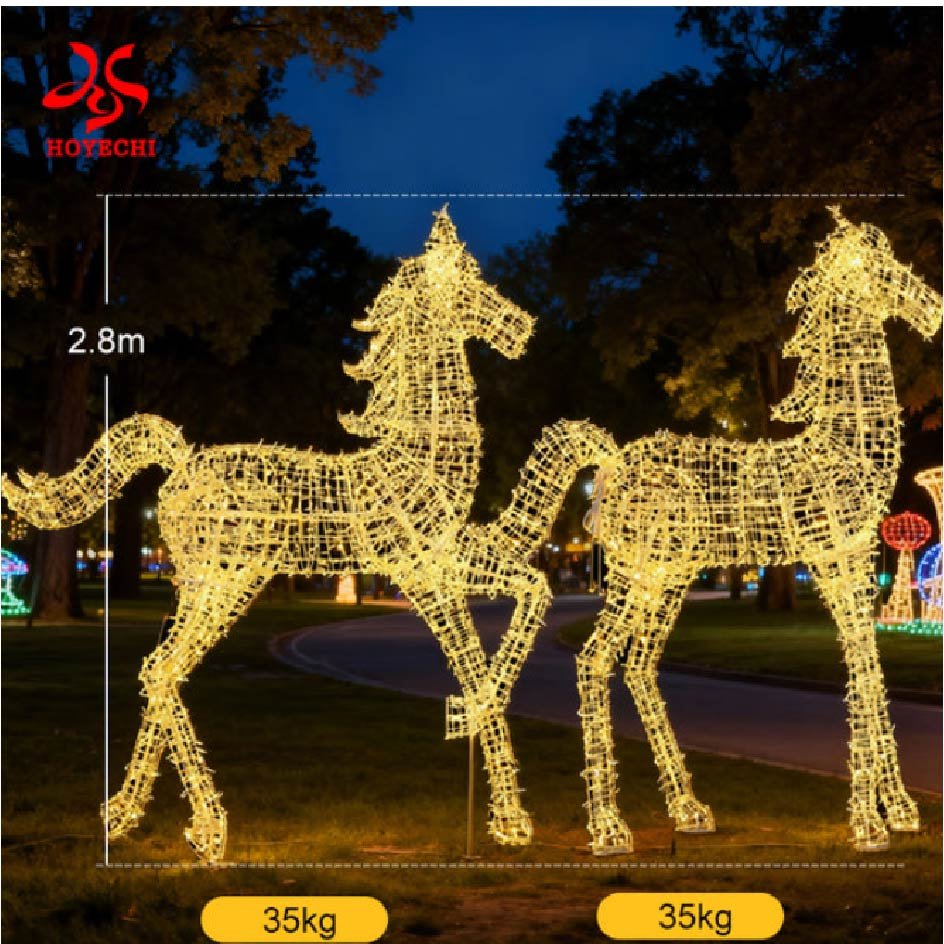
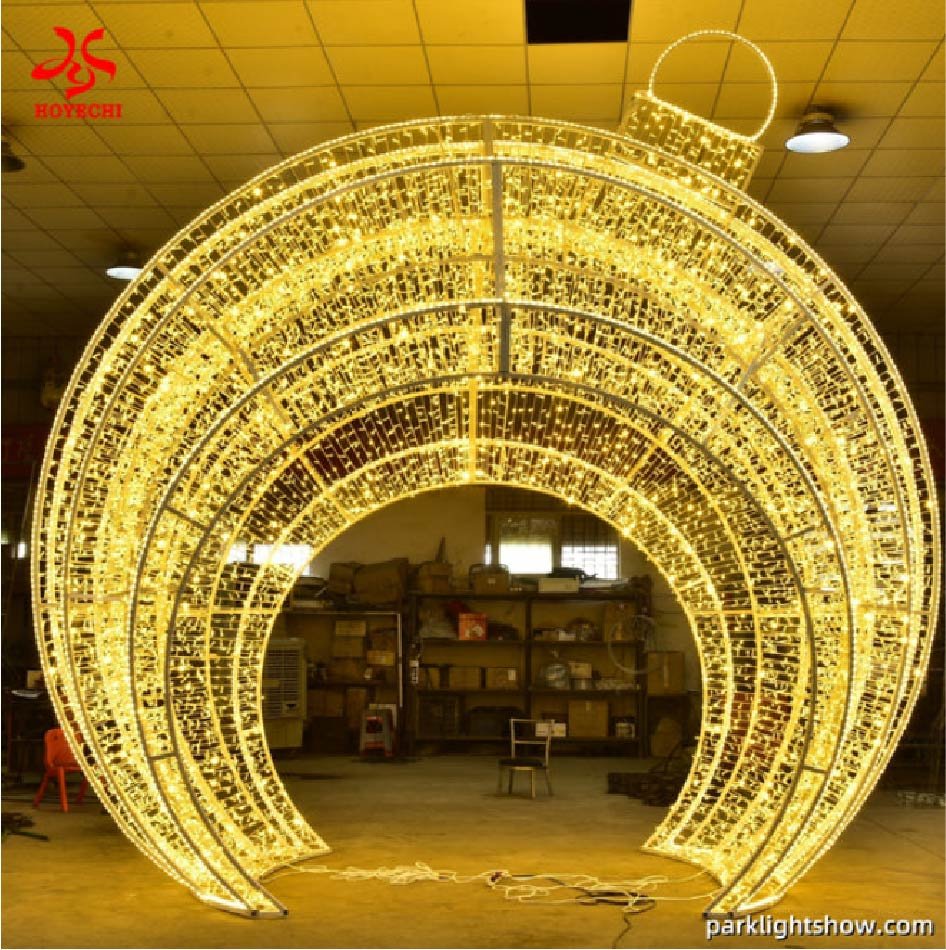
Think giant, glowing gift boxes that are open on two sides. Why? Because parents need to herd their kids inside for that perfect holiday photo. When we design a 5-meter tall LED horse or a walkable ball arch, we aren’t just building a light fixture.
We are building a stage for our clients’ customers. And when they post that photo on Instagram, they are doing your marketing for you, authentically and freely.
The Stuff That Keeps Managers Awake at Night
Here is the unglamorous side that the public never thinks about: engineering. To the average person, a 10-meter outdoor Christmas tree is just pretty lights. To the person responsible for the property, it’s a giant sail waiting for a winter storm.
I’ve seen what happens when clients opt for “residential grade” stuff in a commercial setting. It’s not pretty. A little bit of rain, a connector shorts out, and suddenly half your display is dark on December 15th.
Commercial grade isn’t just a marketing buzzword; it’s peace of mind. It means heavy-gauge iron frames that require a forklift to move. It means connectors that are actually rated IP65 against pressurized water, not just a light drizzle. It means fire-retardant foliage because public safety isn’t optional.
When you invest in real commercial decor, you aren’t buying lights; you’re buying the assurance that it will still be standing and shining on New Year’s Day.
Solving the “Ugly Daytime” Problem
We all know the dirty secret of Christmas lights: they look magical at 8 PM, but they can look like tacky skeletons of wire and plastic at 10 AM. This used to be unavoidable, but the industry is finally waking up.
The most exciting trend right now is “daytime appeal.” We’re leaning heavily into what we call Faux Rattan. It’s essentially using eco-friendly PVC material woven to look like natural vines or wood. We wrap this around the iron frames of deer, bears, or abstract sculptures.
The result? During the day, you have this sophisticated, almost artistic garden sculpture that looks high-end. At night, the warm white LEDs embedded inside glow through the texture. It’s finally a 24-hour solution.
The Real Timeline (A Friendly Warning)
If I could give one piece of advice to a fellow industry professional, it’s this: stop thinking about Christmas in the autumn. I know, it feels crazy to talk about snowmen when it’s warm outside.
But the best projects—the ones that end up in industry magazines—are usually born in March or April. Customizing a giant display isn’t like ordering office supplies. It involves structural design renderings, manufacturing time, and the increasingly complex reality of global ocean freight for oversized cargo.
By August, the good factories (the ones who actually make the stuff, not just resell it) are already nearing capacity. The early bird doesn’t just get the worm; they get better pricing and guaranteed delivery.
The Final Word
At the end of the day, we aren’t just welding iron and stringing LEDs. We’re in the business of place-making. We turn spaces into destinations.
In a digital world, a beautifully executed physical experience is the ultimate luxury. It’s worth investing in it to get it right.

How Firms Adapt Their Services To Regulatory And Market Shifts

Medical Device Prototyping Services: Faster Development Without Compromising Quality

How to Extend the Lifespan of Industrial Hydraulic Components

How On-Demand Delivery Can Double Your Sales

The Vital Role Of General Dentistry In Lifelong Oral Health

How to Choose the Right Mousepad desk mats for Your Desk Layout

How Rocket Canopy Windproof Walls Protect Your Booth in Harsh Weather

Why Preventive Dental Planning Matters For Households

Why Parasite Prevention Is A Central Focus In Veterinary Clinics

Common Mistakes People Make When Buying Paneer Cheese

Who Is Jennifer Rauchet?: All You Need To Know About Pete Hegseth’s Wife

Who Is Mindy Jennings?: All You Need To Know About Ken Jennings Wife

Who Is Enrica Cenzatti?: The Untold Story of Andrea Bocelli’s Ex-Wife

Who Is Klarissa Munz: The Untold Story of Freddie Highmore’s Wife

Who Is Mallory Plotnik?: The Untold Story of Phil Wickham’s Wife

Meet Christina Erika Carandini Lee?: All You Need To Know Christopher Lee’s Daughter

Who Is Allison Butler?: The Life and Influence of Kirk Herbstreit Wife

Who Is Terrance Michael Murphy?: Everything about Audie Murphy’s Son

Alec Bohm Wife: Everything You Need to Know About Jacque Darby

Who Is Jessica Marie Blosil?: Everything About Marie Osmond’s Daughter
How Firms Adapt Their Services To Regulatory And Market Shifts
Medical Device Prototyping Services: Faster Development Without Compromising Quality
How to Extend the Lifespan of Industrial Hydraulic Components
How On-Demand Delivery Can Double Your Sales
The Vital Role Of General Dentistry In Lifelong Oral Health
How to Choose the Right Mousepad desk mats for Your Desk Layout
How Rocket Canopy Windproof Walls Protect Your Booth in Harsh Weather
Why Preventive Dental Planning Matters For Households
Why Parasite Prevention Is A Central Focus In Veterinary Clinics
Common Mistakes People Make When Buying Paneer Cheese
-
 Celebrity1 year ago
Who Is Jennifer Rauchet?: All You Need To Know About Pete Hegseth’s Wife
-
 Celebrity1 year ago
Who Is Mindy Jennings?: All You Need To Know About Ken Jennings Wife
-
 Celebrity1 year ago
Who Is Enrica Cenzatti?: The Untold Story of Andrea Bocelli’s Ex-Wife
-
 Celebrity2 years ago
Who Is Klarissa Munz: The Untold Story of Freddie Highmore’s Wife