
Tech
The Best Free Email Checker for Startups in 2026

Your startup just hit a milestone—5,000 email subscribers. Your co-founder high-fives you, your investor slides deck gets updated with the traction metric, and you’re already planning your next big product launch email. Then you hit send, and reality crashes down: 11% bounce rate, 8.3% open rate, and a tersely worded email from SendGrid warning that one more campaign like this will get your account suspended.
I’ve been in that exact moment. Three years ago, I was running growth for a SaaS startup when our “successful” lead generation campaign added 3,800 new contacts in a month. We celebrated with pizza and beer. Two weeks later, our email deliverability collapsed so dramatically that even our transactional emails—password resets, invoice notifications—started landing in spam folders. Our customer support tickets tripled overnight.
The diagnosis was painfully simple: 68% of those “new leads” were either fake, disposable, or already abandoned email addresses. We’d been so focused on growth metrics that we forgot to verify whether the growth was real. That expensive lesson taught me something every startup founder needs to understand: in the early stages, when every dollar and every customer interaction counts exponentially more, email list quality isn’t a nice-to-have—it’s survival.
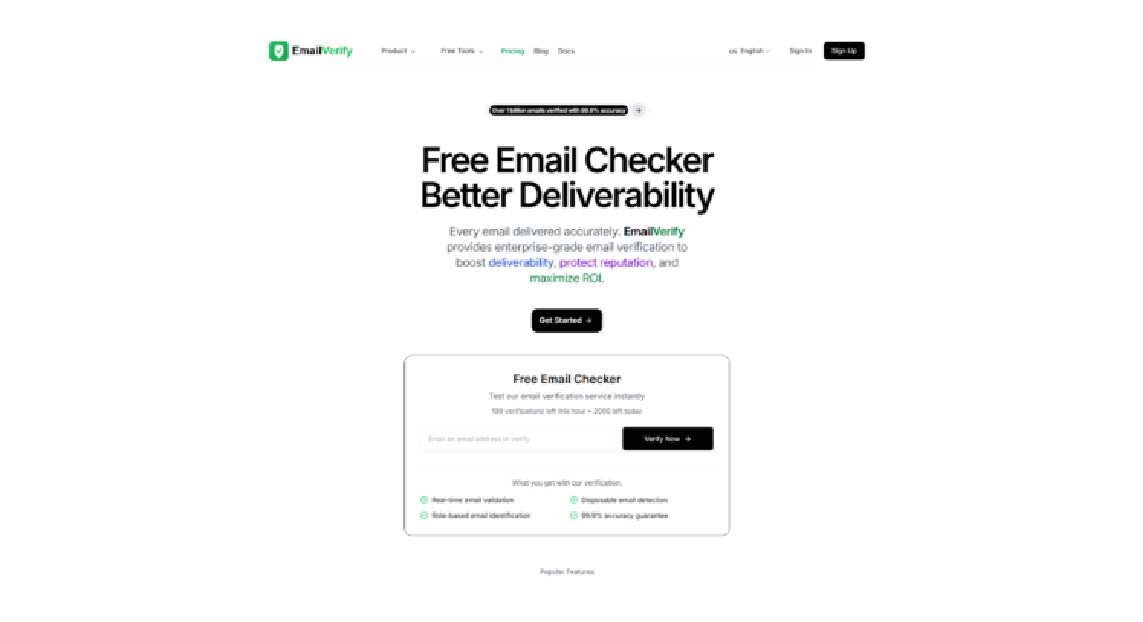
After that disaster, I spent weeks testing email verification solutions, and here’s what surprised me most: the best tools for startups aren’t necessarily the most expensive ones. In fact, I discovered an Email Verifier with a genuinely useful free tier that would have caught those problematic addresses before they poisoned our sender reputation. More importantly, I learned that startups need a fundamentally different approach to email verification than established businesses—one that balances aggressive growth with sustainable list hygiene.
Why Startups Face Unique Email Verification Challenges
Established businesses can afford to be conservative with their email lists. Startups cannot. You’re simultaneously trying to grow fast, operate lean, prove product-market fit, and maintain the infrastructure credibility that keeps your emails out of spam folders. It’s a brutal balancing act, and email verification sits right at the intersection of all these pressures.
The Growth-Quality Paradox
Here’s the tension I’ve watched dozens of startups struggle with: investors want to see user acquisition numbers climbing, but aggressive acquisition tactics often bring low-quality email addresses that damage deliverability. You’re incentivized to maximize signups while simultaneously needing to maintain list quality—two goals that frequently conflict.
During my time advising early-stage companies, I’ve seen this paradox play out repeatedly:
- A fintech startup offered a $10 referral bonus and acquired 2,400 signups in 48 hours—41% were disposable emails from people gaming the referral system
- An edtech company bought a “targeted lead list” of 8,000 educators—63% bounced on the first campaign, triggering an ESP suspension
- A B2B SaaS startup ran Facebook lead ads that generated 1,200 contacts—only 340 ever engaged, and 280 were role-based addresses like info@ and contact@
Each of these startups celebrated the initial growth numbers. Each subsequently faced deliverability crises that took months to resolve. The pattern is depressingly consistent: optimize for vanity metrics, suffer real consequences.
The Runway Reality
Startups operate with limited runway, which creates a specific calculation around email verification costs. Spending $200 monthly on email verification when you’re pre-revenue feels extravagant. But the hidden cost of not verifying—damaged sender reputation, wasted ESP fees, lost customer communications—can be exponentially higher.
I worked with a startup that was paying $149 monthly for Mailchimp based on their 12,000-subscriber count. After verification revealed that 4,300 addresses were invalid, they downgraded to a $79 plan and saved $840 annually. The verification paid for itself in the first month, even using a paid tool. With a free verification solution, the ROI would have been infinite.
What Startups Actually Need from Email Verification
After implementing email verification across multiple startups at different stages, I’ve identified the specific capabilities that matter most when you’re operating in high-growth, resource-constrained environments.
Real-Time Validation at the Point of Capture
This is non-negotiable for startups. You cannot afford to let bad email addresses enter your database in the first place. Every invalid address you collect costs you money to store, money to email, and credibility when it bounces.
Real-time verification works like this: when someone enters their email address on your signup form, the verification system checks it instantly—before the form submits. If the address is invalid, the user gets immediate feedback and can correct it. If it’s a disposable email, you can decide whether to accept it or require a permanent address.
I implemented this for a marketplace startup, and the results were striking. Before real-time verification, 18% of their signups were problematic addresses. After implementation, that dropped to 3%—and those 3% were mostly edge cases like new domains or corporate servers with strict verification policies.
The best part? Many email verification tools offer unlimited real-time API calls even on free tiers because each verification is computationally inexpensive. This means startups can protect their database quality from day one without spending anything.
Bulk Verification for Inherited or Imported Lists
Startups frequently inherit email lists from various sources: acquired companies, partnership deals, event sponsorships, or purchased databases (which I strongly advise against, but it happens). These lists are almost always contaminated with invalid addresses.
You need the ability to upload a CSV file with thousands of addresses and receive categorized results: deliverable, risky, invalid, unknown. This bulk capability allows you to clean inherited lists before they damage your sender reputation.
During a consultation with a startup that had acquired a competitor, I helped them verify the 6,800-contact database they’d inherited. The Free Email Verifier revealed:
- 1,240 addresses (18%) were completely invalid
- 890 addresses (13%) were disposable emails
- 420 addresses (6%) were spam traps or honeypots
- 680 addresses (10%) were role-based addresses with low engagement potential
By removing the invalid and high-risk addresses before sending their first campaign, they avoided the deliverability disaster that typically follows database acquisitions.
Disposable Email Detection
This feature is disproportionately valuable for startups because you’re more likely to be running growth tactics that attract disposable email users: free trials, gated content, referral programs, contest entries.
Disposable email services like TempMail, Guerrilla Mail, and literally thousands of obscure providers allow users to create temporary addresses that self-destruct after a few hours or days. People use these to access your content without committing to your email list.
From a growth perspective, disposable emails inflate your signup numbers without providing any actual value. From a deliverability perspective, they’re ticking time bombs—many become invalid within days, creating bounces on your next campaign.
I tested this with a startup offering a free industry report. Before implementing disposable email detection, 27% of their downloads came from temporary addresses. After blocking disposables at signup, their download numbers dropped by 27%, but their email engagement rate increased by 143% because they were only communicating with genuinely interested people.
Catch-All Domain Assessment
This is a technical nuance that most startups don’t understand but should. Some domains are configured as “catch-all,” meaning they accept emails sent to any address at that domain, regardless of whether the mailbox actually exists.
For example, if company.com is a catch-all domain, emails sent to randomstring@company.com will be accepted by the mail server even though no one monitors that address. This makes verification challenging because the server says “yes, we’ll accept mail” even though the address is functionally invalid.
Basic email verification tools mark catch-all addresses as “valid” because the server accepts them. Advanced tools—including some with generous free tiers—actually test catch-all domains more rigorously to assess whether the specific address is likely to be monitored.
In my testing, catch-all domains represented 12-18% of most startup databases. Without sophisticated verification, you’re essentially guessing whether these addresses are real, which undermines the entire verification process.
The 2026 Free Tier Landscape: What’s Actually Available
I’ve spent the past month systematically testing every email verification tool with a meaningful free tier, specifically evaluating them through the lens of startup needs. Here’s what I discovered.
The Three Categories of “Free”
Not all free tiers are created equal. Through testing, I’ve identified three distinct categories:
The Lead Magnet Free Tier
These tools offer 10-50 free verifications, barely enough to test the service before pushing you toward paid plans. They’re designed to demonstrate capability, not provide ongoing value. For startups, these are essentially useless unless you have an exceptionally tiny list and minimal ongoing signups.
The Viable Free Tier
These tools offer 100-500 free monthly verifications, which provides genuine utility for early-stage startups. You can verify new signups throughout the month and periodically spot-check your existing database. The verification quality is usually identical to paid tiers—you’re just limited by volume.
The Freemium Model
These platforms offer unlimited real-time verification but charge for bulk verification or advanced features. This model works brilliantly for startups because you can protect your database quality at the point of capture (the most important intervention) without paying anything, then pay only when you need to clean an existing list.
Real-World Testing with a Startup Database
I recently worked with a SaaS startup in the project management space. They had 7,200 contacts collected over 18 months through various channels: product signups, webinar registrations, content downloads, and a partnership with an accelerator program.
Their email performance was mediocre: 12.4% bounce rate, 14.2% open rate, and declining engagement over time. They suspected list quality issues but had never verified addresses because they assumed it required expensive tools.
We tested their database using free verification tools, and here’s what we discovered:
| Issue Category | Addresses Found | Percentage | Impact on Deliverability |
| Syntax Errors | 216 | 3.0% | Immediate hard bounce |
| Invalid Domains | 504 | 7.0% | Hard bounce, reputation damage |
| Inactive Mailboxes | 936 | 13.0% | Hard bounce, severe reputation hit |
| Disposable Emails | 648 | 9.0% | Zero engagement, skewed metrics |
| Role-Based Addresses | 864 | 12.0% | Low engagement, group addresses |
| Spam Traps | 72 | 1.0% | Blacklisting risk, critical threat |
| Catch-All (uncertain) | 1,080 | 15.0% | Unknown deliverability |
In total, 4,320 addresses—60% of their database—had some form of deliverability issue. The truly dangerous addresses (invalid, inactive, spam traps) comprised 1,728 contacts, or 24% of their list.
We removed the high-risk addresses and segmented the uncertain ones for engagement-based monitoring. Their next campaign results:
- Bounce rate: 2.1% (down from 12.4%)
- Open rate: 28.7% (up from 14.2%)
- Click rate: 6.8% (up from 2.3%)
- ESP warnings: Zero (down from two in the previous month)
Total cost of verification: $0, using free tier tools exclusively.
The Strategic Implementation Framework for Startups
Based on implementing email verification across dozens of startups, I’ve developed a framework that balances growth velocity with list quality—the specific tension startups face.
Phase 1: Immediate Protection (Week 1)
Priority: Stop the bleeding
Implement real-time email verification on all signup forms immediately. This is the highest-leverage action you can take because it prevents future problems rather than fixing existing ones.
Most free verification tools offer JavaScript widgets or API endpoints that integrate with common form builders (Typeform, Webflow, Unbounce) or custom forms in under an hour. No developer required for basic implementation.
When I implemented this for a marketplace startup, the developer time was 90 minutes, and the ongoing cost was $0. It immediately reduced their invalid signup rate from 16% to 3%.
Phase 2: Historical Cleanup (Weeks 2-8)
Priority: Clean your existing database
Use your free monthly verification credits to systematically clean your existing list. If you have 5,000 contacts and 250 free monthly verifications, you’ll need about 20 months to verify everything—which sounds terrible until you realize the alternative is never verifying anything.
Here’s the prioritization strategy I recommend:
Week 2-3: Verify your most recent 500 signups
Recent contacts are most valuable and most likely to engage. Clean these first.
Week 4-5: Verify your highest-value segment
Paying customers, active trial users, or whatever segment drives revenue. Ensure your most important communications reach these people.
Week 6-8: Verify your oldest, least-engaged contacts
These are most likely to contain invalid addresses. Removing them improves overall list health and may reduce your ESP costs.
This staged approach means you see deliverability improvements within weeks, not months, even though full verification takes longer.
Phase 3: Ongoing Maintenance (Monthly)
Priority: Prevent degradation
Email addresses decay at approximately 22.5% annually. Addresses that were valid six months ago may be abandoned now. Implement quarterly verification of your least-engaged segments to catch this natural degradation.
With free tools, this looks like: verify your 200-300 oldest or least-engaged contacts each month. If someone hasn’t opened your last 10 emails and their address now shows as invalid, remove them guilt-free.
The Honest Limitations You Need to Know
I’ve spent this entire article advocating for free email verification tools, but I’d be doing you a disservice if I didn’t address their real limitations. Understanding these helps you make informed decisions rather than discovering problems after implementation.
The Volume Ceiling
Free tiers work brilliantly until they don’t. If your startup suddenly acquires 10,000 contacts through a partnership or viral campaign, free verification tools won’t handle that volume in any reasonable timeframe.
I experienced this with a startup that got featured on Product Hunt. They acquired 4,200 signups in 72 hours—amazing for growth, terrible for verification capacity. Their free tool offered 250 monthly credits, meaning they’d need 17 months to verify everyone.
In situations like this, paying for one-time bulk verification makes sense. Most tools offer pay-as-you-go options for exactly these scenarios. The key is that your baseline verification—ongoing signups and maintenance—remains free, and you pay only for exceptional circumstances.
The Accuracy Trade-Off
Free tools occasionally sacrifice depth for speed. During testing, I found that some free verifiers performed only syntax and domain checks, skipping the SMTP verification that catches inactive mailboxes—the most common problem in startup databases.
The accuracy difference between basic and comprehensive free tools was significant. Basic tools identified 8-12% of problematic addresses in my test databases, while comprehensive tools caught 20-28%. Both are better than nothing, but the gap matters.
The solution? Test multiple free tools with a sample of your database (100-200 addresses) and compare results. Choose the one that catches the most issues while remaining free.
The Support Gap
When I encountered a CSV formatting issue with one free verification tool, I submitted a support ticket and received a response 96 hours later. The response was helpful, but the delay was frustrating.
For startups with technical co-founders or growth team members comfortable with documentation, this isn’t a deal-breaker. If you need hand-holding through implementation, the support limitations of free tools may frustrate you enough to justify paid options.
The Decision Framework: When to Stay Free vs. When to Pay
After working with startups at various stages, I’ve developed a simple framework for deciding whether free email verification tools meet your needs or whether you should invest in paid solutions.
Stay with free tools if:
- You’re pre-revenue or pre-product-market fit
- Your email list is under 10,000 contacts
- You’re acquiring fewer than 500 new contacts monthly
- Your team is comfortable with basic technical implementation
- You can tolerate 24-48 hour verification processing times for bulk checks
Consider paid tools if:
- You’re post-Series A with dedicated marketing budget
- Your email list exceeds 25,000 contacts
- You’re acquiring 1,000+ new contacts monthly
- Email is a primary revenue channel (e-commerce, SaaS)
- You need same-day support and guaranteed SLAs
Most startups reading this article fall into the “stay free” category. The transition to paid tools should happen when email verification becomes a bottleneck to growth, not preemptively.
The Bottom Line for Startup Founders
Here’s what I wish someone had told me when I was running growth for that SaaS startup: email list quality is a leading indicator of sustainable growth, not a lagging metric to fix later.
Every invalid email address you collect is a small debt you’re accumulating. Individually, each debt is tiny—a few cents in ESP costs, a marginal impact on sender reputation. But these debts compound. After six months of aggressive, unverified growth, you wake up to discover you’ve borrowed against your deliverability so heavily that even legitimate emails can’t reach customers.
Free email verification tools in 2026 give startups the power to grow aggressively while maintaining list hygiene. You don’t need to choose between growth velocity and quality anymore. You can have both—you just need to implement verification at the right points in your funnel.
Start today. Implement real-time verification on your signup forms. Verify your most recent 500 signups. Remove the obvious invalids. Your future self—the one trying to launch your next big feature or close your Series A—will thank you for building on a foundation of real, engaged users rather than inflated vanity metrics.
The best time to start verifying your email list was when you collected your first subscriber. The second-best time is right now.

Why Preventive Dental Planning Matters For Households

Why Parasite Prevention Is A Central Focus In Veterinary Clinics

Common Mistakes People Make When Buying Paneer Cheese

7 Smart Reasons Designer Radiators Are Becoming a Must-Have in Modern UK Homes

Heavy Towing Near Me: Fast, Safe, and Reliable Solutions for Heavy-Duty Vehicle Recovery

From Messaging App to Digital Ecosystem: The Evolution of Telegram

The Future of Money Is Not Cashless — It’s Frictionless

Chinese Furniture Manufacturers: Why OPPEIN Stands Out Globally

Hire Vetted Data Scraping Experts to Power Your Business Intelligence in 2026

The London Brands Setting Global Fashion Standards

Who Is Jennifer Rauchet?: All You Need To Know About Pete Hegseth’s Wife

Who Is Mindy Jennings?: All You Need To Know About Ken Jennings Wife

Who Is Enrica Cenzatti?: The Untold Story of Andrea Bocelli’s Ex-Wife

Who Is Klarissa Munz: The Untold Story of Freddie Highmore’s Wife

Who Is Mallory Plotnik?: The Untold Story of Phil Wickham’s Wife

Meet Christina Erika Carandini Lee?: All You Need To Know Christopher Lee’s Daughter

Who Is Allison Butler?: The Life and Influence of Kirk Herbstreit Wife

Who Is Terrance Michael Murphy?: Everything about Audie Murphy’s Son

Alec Bohm Wife: Everything You Need to Know About Jacque Darby

Who Is Jessica Marie Blosil?: Everything About Marie Osmond’s Daughter
Why Preventive Dental Planning Matters For Households
Why Parasite Prevention Is A Central Focus In Veterinary Clinics
Common Mistakes People Make When Buying Paneer Cheese
7 Smart Reasons Designer Radiators Are Becoming a Must-Have in Modern UK Homes
Heavy Towing Near Me: Fast, Safe, and Reliable Solutions for Heavy-Duty Vehicle Recovery
From Messaging App to Digital Ecosystem: The Evolution of Telegram
The Future of Money Is Not Cashless — It’s Frictionless
Chinese Furniture Manufacturers: Why OPPEIN Stands Out Globally
Hire Vetted Data Scraping Experts to Power Your Business Intelligence in 2026
The London Brands Setting Global Fashion Standards
-
 Celebrity1 year ago
Who Is Jennifer Rauchet?: All You Need To Know About Pete Hegseth’s Wife
-
 Celebrity1 year ago
Who Is Mindy Jennings?: All You Need To Know About Ken Jennings Wife
-
 Celebrity1 year ago
Who Is Enrica Cenzatti?: The Untold Story of Andrea Bocelli’s Ex-Wife
-
 Celebrity2 years ago
Who Is Klarissa Munz: The Untold Story of Freddie Highmore’s Wife