
Blog
What Makes a Software Development Agency Truly Agile

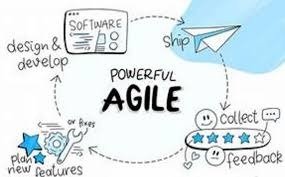
Many product teams feel stuck: long release cycles, misaligned priorities, and slow feedback that turns good ideas into costly rewrites. That friction kills momentum for VC-backed startups and innovation teams who must prove product-market fit quickly.
The fix is not just following Scrum rituals but finding an agile software agency that combines product thinking, fast learning loops, and engineering discipline so you can test market assumptions and ship measurable outcomes. A truly agile partner helps you reduce risk, improve user engagement, and move from MVP to scale without rebuilding the core.
In this blog, we’ll explain what agility really looks like for a software development agency and how to assess a partner for speed, quality, and measurable product impact. You will get practical checks, architecture guidance, sample team structures, and an onboarding playbook you can use immediately.
What Agile Means For A Software Development Agency
Agile is the ability to respond to change while delivering working software frequently. For an agency, this means more than standups; it is about short feedback cycles, validated learning, and a clear link from engineering activity to business outcomes. Look for teams that practice incremental delivery, prioritize outcomes over features, and run experiments that prove customer value early.
Why Agility Matters For Startups And Innovation Teams
Startups and enterprise innovation groups share a single constraint: limited time to validate hypotheses. An agile partner enables:
- Faster validation of product-market fit through short sprints and release-driven experiments.
- Lower failure cost because releases are less significant and problems are detected earlier.
- Better alignment among product, design, and engineering so user feedback becomes prioritized work.
Case studies and industry data show that many organizations report improved alignment with business needs and faster response to market changes after adopting Agile practices. That means your choice of agency directly affects conversion, retention, and fundraising success.
Core Traits Of A Truly Agile Software Development Agency
To spot a genuine agile partner, evaluate these traits:
- Outcome Focused Delivery
-
-
- Roadmaps mapped to measurable KPIs (activation, retention, conversion).
- Sprint goals tied to experiments and user metrics, not just feature checklists.
-
- Cross-Functional, Small Teams
-
-
- Designers, product, backend, mobile, QA, and a delivery lead working together.
- Teams are empowered to make technical and product trade-offs rapidly.
-
- Continuous Integration And Deployment Practices
-
-
- Automated pipelines, feature flags, and trunk-based development to shorten feedback loops.
-
- Product Research And User Testing Built In
-
-
- Regular user interviews, prototypes, and A/B test capability.
-
- Observability And Incident Playbooks
-
-
- Monitoring for p95/p99 latency, error budgets, and defined mean time to recovery targets.
-
- Data-Informed Roadmaps
-
- Instrumentation for cohort analysis, funnel metrics, and live dashboards.
These capabilities let an agency move beyond “we follow Scrum” into measurable agility that delivers business outcomes.
Practical Technical Practices That Support Agility
Concrete technical choices make short iterations reliable and scalable:
- Automated Testing and CI/CD: Unit, integration, and end-to-end tests that run on every commit; pipelines that promote builds through environments automatically.
- Feature Flags and Canary Releases: Launch changes to a subset of users to collect metrics before a full rollout.
- Modular Code and API-First Design: Modular monoliths or small, well-defined services to enable safe, incremental refactors.
- Cloud-Native Infrastructure and IaC: Infrastructure-as-code, autoscaling, and managed services reduce operational friction and speed deployments.
- Observability Stack: Logging, distributed tracing, and metrics collection to make issues visible and actionable.
When assessing proposals, ask for concrete examples of these practices and metrics such as pipeline run times, test coverage, and rollback frequency.
How They Incorporate AI And Data Into Agile Delivery
Many teams now expect GenAI features or AI-ML enhancements as part of product roadmaps. An agile agency should show:
- Rapid model prototyping and feasibility sprints.
- MLOps practices for reproducible training and safe deployments.
- Integration strategies that keep core product reliability intact while iterating on models.
Industry reports highlight that organizations experimenting with GenAI are seeing early gains but also face integration and measurement challenges; partners who combine product experimentation with solid MLOps produce measurable results faster.
Team Composition And Engagement Models That Work For Scaling Products
A recommended team for moving from UX-led MVP to scale:
- Product Lead / PM (owns outcomes and backlog)
- UX Researcher + Product Designer (rapid prototypes)
- Tech Lead / Architect (system design and technical trade-offs)
- Frontend Engineer(s) (web/mobile)
- Backend Engineer(s) (APIs, services)
- QA / SDET (automation)
- DevOps / Cloud Engineer (CI/CD, infra, monitoring)
Engagement models to choose from:
- Discovery Sprint (2–4 weeks) to validate assumptions and architecture
- Fixed-scope Pilot (4–8 weeks) focused on a high-value experiment
- Dedicated Team (longer-term, best for scaling)
- Time & Materials with milestone-based acceptance
Pick the model that matches how much uncertainty you have and how quickly you need validated learnings.
How To Validate An Agency Before You Commit
Use this checklist during shortlisting and vendor calls:
- Ask For Relevant Case Studies With Numbers: Look for metrics such as activation lift, conversion improvement, and scaling figures.
- Request A Short Technical Audit or Architecture Sketch: A credible agency will offer a quick design review and trade-offs.
- Run a Paid Discovery Sprint: A 4–6-week paid sprint reveals the delivery rhythm, communication, and empathy for domain problems.
- Verify CI/CD and Testing Toolchain: Check for automated deployments, rollback procedures, and test maturity.
- Talk to References About Post-Launch Support: Ask how the agency handled incidents, scaled the product, and transferred knowledge.
These steps reduce risk and surface whether the agency’s agility is real or just a label.
Measures And Reporting You Should Expect Post-Launch
An agile partner should provide transparent reporting that connects engineering to business metrics:
- Sprint Reports with demo outcomes tied to KPIs
- Product Dashboards showing activation, retention, and funnel conversion
- System Health Dashboards (uptime, p95/p99 latency, error rate)
- Delivery Metrics (cycle time, lead time, MTTR)
Demanding these artifacts early sets the tone for accountability and continuous improvement.
Quick Selection Scorecard
- Outcome Orientation: Do they define KPIs and commit to measuring them?
- Delivery Rhythm: Can they show weekly or biweekly releases into production?
- Design-Led Approach: Do they run user research and test prototypes?
- DevOps Maturity: CI/CD, feature flags, observability in place?
- AI & Data Capability: Proven MLOps and responsible model deployment?
- References and Case Studies: Real numbers and post-launch results?
Score each vendor 1–5 for each item to produce an objective shortlist.
Onboarding Playbook For The First 90 Days
- Week 0: Align outcomes, access, and communication channels.
- Weeks 1–2: Discovery sprint interviews, user journeys, risk map, proof-of-concept.
- Weeks 3–8: Build MVP increments with weekly demos and instrumentation.
- Weeks 9–12: Harden production readiness load tests, observability, runbook, and handover plan.
This staged approach allows for iteration and to prove the partnership before scaling the team or scope.
Final Notes
A software development agency is truly agile when it links short cycles to measurable business outcomes, uses engineering best practices to reduce deployment risk, and treats product learning as the primary deliverable. When you evaluate partners, prioritize outcome-based contracts, a short paid discovery sprint, and evidence of the technical practices outlined here. If you want, I can convert the scorecard into a one-page RFP template you can send to agencies, or build a 90-day onboarding checklist tailored to your stack and industry.

How On-Demand Delivery Can Double Your Sales

The Vital Role Of General Dentistry In Lifelong Oral Health

How to Choose the Right Mousepad desk mats for Your Desk Layout

How Rocket Canopy Windproof Walls Protect Your Booth in Harsh Weather

Why Preventive Dental Planning Matters For Households

Why Parasite Prevention Is A Central Focus In Veterinary Clinics

Common Mistakes People Make When Buying Paneer Cheese

7 Smart Reasons Designer Radiators Are Becoming a Must-Have in Modern UK Homes

Heavy Towing Near Me: Fast, Safe, and Reliable Solutions for Heavy-Duty Vehicle Recovery

From Messaging App to Digital Ecosystem: The Evolution of Telegram

Who Is Jennifer Rauchet?: All You Need To Know About Pete Hegseth’s Wife

Who Is Mindy Jennings?: All You Need To Know About Ken Jennings Wife

Who Is Enrica Cenzatti?: The Untold Story of Andrea Bocelli’s Ex-Wife

Who Is Klarissa Munz: The Untold Story of Freddie Highmore’s Wife

Who Is Mallory Plotnik?: The Untold Story of Phil Wickham’s Wife

Meet Christina Erika Carandini Lee?: All You Need To Know Christopher Lee’s Daughter

Who Is Allison Butler?: The Life and Influence of Kirk Herbstreit Wife

Who Is Terrance Michael Murphy?: Everything about Audie Murphy’s Son

Alec Bohm Wife: Everything You Need to Know About Jacque Darby

Who Is Jessica Marie Blosil?: Everything About Marie Osmond’s Daughter
How On-Demand Delivery Can Double Your Sales
The Vital Role Of General Dentistry In Lifelong Oral Health
How to Choose the Right Mousepad desk mats for Your Desk Layout
How Rocket Canopy Windproof Walls Protect Your Booth in Harsh Weather
Why Preventive Dental Planning Matters For Households
Why Parasite Prevention Is A Central Focus In Veterinary Clinics
Common Mistakes People Make When Buying Paneer Cheese
7 Smart Reasons Designer Radiators Are Becoming a Must-Have in Modern UK Homes
Heavy Towing Near Me: Fast, Safe, and Reliable Solutions for Heavy-Duty Vehicle Recovery
From Messaging App to Digital Ecosystem: The Evolution of Telegram
-
 Celebrity1 year ago
Who Is Jennifer Rauchet?: All You Need To Know About Pete Hegseth’s Wife
-
 Celebrity1 year ago
Who Is Mindy Jennings?: All You Need To Know About Ken Jennings Wife
-
 Celebrity1 year ago
Who Is Enrica Cenzatti?: The Untold Story of Andrea Bocelli’s Ex-Wife
-
 Celebrity2 years ago
Who Is Klarissa Munz: The Untold Story of Freddie Highmore’s Wife