
Business
What Professional Fabricators Look for in Industrial Welding Equipment

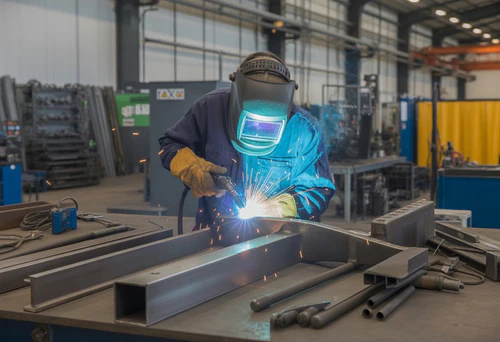
Walk into any successful fabrication shop and you’ll notice something right away. The equipment isn’t the newest or the flashiest, but it’s running constantly, producing clean welds, and the operators trust it completely. That’s not an accident. Professional fabricators choose their welding equipment based on criteria that go way beyond the spec sheet, and understanding these priorities makes the difference between a shop that thrives and one that constantly fights equipment problems.
Duty Cycle Reality
The duty cycle rating tells you how long a welder can operate within a ten-minute period before it needs to cool down. A machine rated at 60% duty cycle can weld for six minutes, then needs four minutes of rest. Sounds straightforward, but here’s what matters in actual production environments.
Professionals need machines that can handle unexpected demand. A fabrication job might require three straight hours of welding to meet a deadline. Equipment rated for light industrial use will overheat, shut down, and cost valuable time. The best shops look for welders with duty cycles that exceed their typical requirements because production demands change without warning. When a rush job comes in or multiple operators need to share equipment, that extra capacity becomes essential rather than optional.
Build Quality That Survives the Shop Floor
Industrial environments are tough on equipment. Metal dust, grinding debris, temperature swings, and the occasional accidental impact are just part of normal operations. The welding machines that last in these conditions share some common traits that professionals recognize immediately.
Heavy-gauge steel chassis, proper ventilation systems, and components mounted to handle vibration make the difference between equipment that survives years of use and machines that start failing within months. When evaluating options, many fabricators turn to established manufacturers known for durability. For instance, kemppi welders have built a reputation in demanding industrial settings where equipment reliability directly impacts production schedules and project profitability.
The circuit boards, transformers, and internal wiring also matter more than most people realize. Cheaper machines use components that degrade quickly under the thermal stress of continuous operation. Professional-grade equipment uses parts designed for industrial duty, which costs more upfront but avoids the frustration of mysterious failures and expensive repairs.
Control Precision and Repeatability
Modern welding involves more than just striking an arc and moving the torch. Complex projects require precise control over amperage, voltage, wire feed speed, and other parameters that affect weld quality. Professional fabricators need equipment that maintains these settings consistently, shift after shift, operator after operator.
Digital controls have changed how this works. Instead of analog dials that drift over time or get bumped out of position, quality welders now feature digital interfaces that store programs for different materials and thicknesses. An operator can switch from welding 3mm steel to 6mm aluminum by selecting a saved program rather than manually adjusting five different parameters and hoping they got it right.
This consistency matters enormously when training new welders or maintaining quality across a team. The machine compensates for minor technique variations, producing similar results regardless of who’s running it. That’s not about making welding easier, it’s about reducing the variables that cause defects and rework.
Serviceability When Things Go Wrong
Every piece of equipment eventually needs maintenance or repair. The question is whether that means a quick fix or weeks of downtime waiting for proprietary parts that only one technician in the region knows how to install.
Smart fabricators consider serviceability before making a purchase. Can local technicians work on this equipment? Are replacement parts available without ordering from overseas? Does the manufacturer provide technical support that actually helps solve problems? These questions sound boring compared to discussing amperage ratings and arc characteristics, but they become critically important at 2 AM when a machine fails in the middle of a deadline-driven project.
Modular designs allow technicians to swap out circuit boards or transformers without dismantling the entire machine. Clear labeling and accessible component placement reduce diagnostic time. Some manufacturers even provide detailed service manuals and training for local repair shops, which means faster turnaround when problems occur.
Multi-Process Capability
Fabrication shops rarely work with just one material or welding process. A typical week might involve MIG welding steel structures, TIG welding aluminum components, and stick welding heavy repairs. Buying separate machines for each process costs money and takes up valuable floor space.
Multi-process welders handle different techniques within a single unit, but the quality varies dramatically between models. Professional fabricators look for machines that excel at their primary process while offering genuinely useful capability in secondary processes, not just checkbox features that barely work in real applications.
The transitions between processes need to be straightforward too. If switching from MIG to TIG requires twenty minutes of setup and recalibration, operators won’t bother, and the shop loses flexibility. The best equipment makes process changes simple enough that operators actually use the capability when projects demand it.
Power Requirements and Efficiency
Most people focus on what a welder can do and forget to consider what it needs to operate. Industrial welders draw significant power, and not every shop has the electrical infrastructure to support every machine on the market.
Three-phase power provides the most efficient operation for high-amperage welders, but smaller shops might only have single-phase available. Some machines work with either input, though performance differs. Understanding these requirements before purchase prevents the expensive surprise of needing electrical upgrades before equipment can even run.
Energy efficiency also matters more than it used to. Power costs add up over thousands of hours of operation, and newer inverter-based welders use considerably less electricity than older transformer machines while delivering better arc characteristics. The savings might not seem dramatic in monthly utility bills, but calculated over the equipment’s lifetime, efficiency differences become significant.
The User Experience Factor
Professional welders spend entire shifts operating this equipment, and usability affects both productivity and job satisfaction. Controls need to be intuitive enough that operators spend time welding instead of fumbling with settings. Displays should be readable in various lighting conditions, including the bright arc light that dominates during operation. Even details like the torch cable length and flexibility influence how comfortably an operator can work.
The best fabrication shops involve their welders in equipment decisions because the people using the machines daily understand these practical considerations better than anyone reading specifications in an office. A welder who finds their equipment comfortable and responsive produces better work and wastes less time fighting the tools.
Making the Investment Count
Choosing industrial welding equipment comes down to understanding that the initial purchase price represents only part of the total cost. Reliability, serviceability, efficiency, and operator satisfaction all factor into whether a machine becomes a valuable shop asset or an expensive source of frustration. Professional fabricators know this, which is why they prioritize quality and capability over finding the cheapest option that technically meets minimum requirements. The right equipment doesn’t just perform well, it enables the entire shop to work better.

Heavy Towing Near Me: Fast, Safe, and Reliable Solutions for Heavy-Duty Vehicle Recovery

From Messaging App to Digital Ecosystem: The Evolution of Telegram

The Future of Money Is Not Cashless — It’s Frictionless

Chinese Furniture Manufacturers: Why OPPEIN Stands Out Globally

Hire Vetted Data Scraping Experts to Power Your Business Intelligence in 2026

The London Brands Setting Global Fashion Standards

The Psychology of Why We Love Solving Mysteries Under Pressure

Creative Ways to Level Up Your Home Gaming Environment for Friends

Understanding Image to Image Through Model Capabilities Evolution

2026 Prenup Report: Public Opinion, Misconceptions, and Motivations

Who Is Jennifer Rauchet?: All You Need To Know About Pete Hegseth’s Wife

Who Is Mindy Jennings?: All You Need To Know About Ken Jennings Wife

Who Is Enrica Cenzatti?: The Untold Story of Andrea Bocelli’s Ex-Wife

Who Is Klarissa Munz: The Untold Story of Freddie Highmore’s Wife

Who Is Mallory Plotnik?: The Untold Story of Phil Wickham’s Wife

Meet Christina Erika Carandini Lee?: All You Need To Know Christopher Lee’s Daughter

Who Is Allison Butler?: The Life and Influence of Kirk Herbstreit Wife

Who Is Terrance Michael Murphy?: Everything about Audie Murphy’s Son

Alec Bohm Wife: Everything You Need to Know About Jacque Darby

Who Is Jessica Marie Blosil?: Everything About Marie Osmond’s Daughter
Heavy Towing Near Me: Fast, Safe, and Reliable Solutions for Heavy-Duty Vehicle Recovery
From Messaging App to Digital Ecosystem: The Evolution of Telegram
The Future of Money Is Not Cashless — It’s Frictionless
Chinese Furniture Manufacturers: Why OPPEIN Stands Out Globally
Hire Vetted Data Scraping Experts to Power Your Business Intelligence in 2026
The London Brands Setting Global Fashion Standards
The Psychology of Why We Love Solving Mysteries Under Pressure
Creative Ways to Level Up Your Home Gaming Environment for Friends
Understanding Image to Image Through Model Capabilities Evolution
2026 Prenup Report: Public Opinion, Misconceptions, and Motivations
-
 Celebrity1 year ago
Who Is Jennifer Rauchet?: All You Need To Know About Pete Hegseth’s Wife
-
 Celebrity1 year ago
Who Is Mindy Jennings?: All You Need To Know About Ken Jennings Wife
-
 Celebrity1 year ago
Who Is Enrica Cenzatti?: The Untold Story of Andrea Bocelli’s Ex-Wife
-
 Celebrity2 years ago
Who Is Klarissa Munz: The Untold Story of Freddie Highmore’s Wife