
Fashion
Wide-Brimmed Hats: Fashionable Styles That Protect You from the Sun

Meta Title: Wide-Brimmed Hats: Best Sun Protection & Fashion Styles | Complete Guide
Meta Description: Discover the best wide-brimmed hats for sun protection and style. From floppy beach hats to structured wide brims, learn how to choose and wear these fashion-forward styles.
Slug: /wide-brimmed-hats-guide
You put on SPF, grab your sunglasses, and a baseball cap, and then you go to the beach or the city for the day. By the end of the day, the tops of your ears are pink, the back of your neck is burning, and you realize that the cap you thought was helping didn’t cover much more than your forehead.
Wide-brimmed hats fill this gap by giving your face, ears, and neck real shade while also making you look more put-together and purposeful than most summer accessories do on their own.
This guide tells you why the size of the brim and the style of the hat are important for keeping you safe from the sun. It also tells you how to choose the right wide-brimmed style for different situations and how to wear these hats with confidence instead of feeling like you’re auditioning for a costume drama.
The Logic Behind Sun Protection: Why Brim Size Matters
The way a hat is made affects where shade falls, and most casual caps don’t make enough of it. A baseball cap shades the front of your face reasonably well but leaves your ears completely exposed and does almost nothing for the back of your neck.
A visor is even worse because it doesn’t cover the top of your head at all. A brim that goes three inches or more all the way around the crown, on the other hand, makes a protective shadow that moves with you as the sun moves. This shadow covers not only your face but also the sides of your head, ears, and upper neck, which are the places where skin cancers and sun damage are most likely to happen.
The width of the brim is not the only thing that affects how well a hat works. The weave or density of the material also matters. For example, a loosely woven straw or thin fabric lets UV light through the gaps, which makes the hat less protective. Tests have been done on hats with a UPF rating, which is similar to SPF in sunscreen, to see how much UV radiation they block. For instance, a UPF 50+ rating means that the fabric blocks at least 98% of UV rays, so it is really protective and not just pretty.
Dermatologists and experts on sun safety always say that wide-brimmed hats are a must-have because they are the only type of headwear that protects the face, ears, and neck at the same time without being too heavy or hard to wear. When used with sunscreen and sunglasses, they make up the basic parts of a smart, everyday plan to cut down on long-term sun exposure.
Style Overview: The Most Important Types of Wide-Brimmed Hats
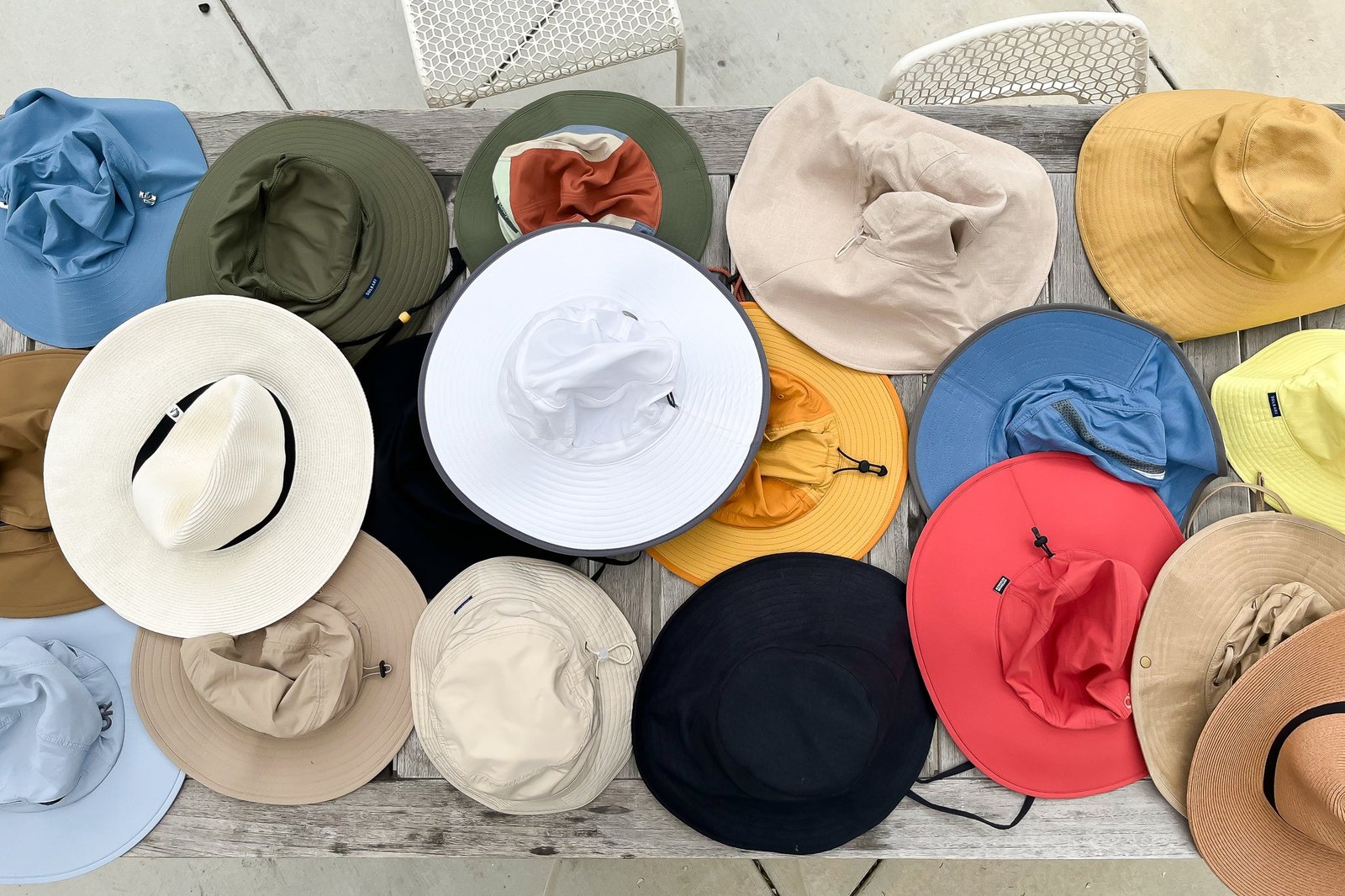
Wide-brimmed hats come in a range of styles, from very casual to very tailored. This means that once people know what their options are, they can usually find a style that goes with their taste and wardrobe.
The floppy hat is probably the most well-known. It is soft, crushable, and has a brim that droops and moves naturally. These are the hats you see poolside, on beach holidays, and in countless summer travel photos. They are made of soft straw, raffia, or fabric and can be folded up for packing.
When you shake them out, they spring back to shape. They are more about ease and vacation vibes than rigid structure. They look great with swimwear, linen dresses, and anything else that looks relaxed and casual for warm weather.
On the other end of the spectrum are structured straw hats and Panamas. These have stiffer brims and more defined crowns. They are often hand-woven or molded to keep their shape. They look more polished and can go from a beach hat in the morning to a city accessory in the afternoon.
They go with sundresses and espadrilles just as well as they do with smart linen pants and plain shirts. The cleaner lines make them easier to wear in places that aren’t obviously vacation-related without looking out of place.
Wide-brimmed fedoras and other tailored shapes make things even more formal and structured. These usually have a leather or grosgrain ribbon band, a crease in the crown, and a brim that bends in a certain way. People who want to protect their skin from the sun but also want a more urban and polished look will like these. They go well with casual and even semi-formal summer outfits.
Learning about these summer wide-brimmed hat styles makes it clear that choosing one is not about committing to one dramatic shape. It’s about finding the one that goes with your usual clothes, the things you do most often, and how much structure you like to wear on your head.
Function First: Choosing a Wide Brim Hat for Sun
There are a few things that set hats that work apart from those that just look good when the main goal is to protect the head from the sun. The brim should be at least three inches wide all the way around the crown, so that it provides shade no matter which way you are facing. Brims that are asymmetrical or only on the front might look good, but they don’t cover everything, which defeats the purpose.
The material you choose affects both comfort and safety. Natural straw is light, breathable, and gives off a classic vacation vibe. However, the weave needs to be tight enough that you can’t see much light through it when you hold it up. Cotton, linen, or canvas fabrics that are tightly woven give good coverage and are often more durable and easier to clean. Performance fabrics made for outdoor sports often have built-in UPF ratings and moisture-wicking properties. This makes them great for long hikes, gardening, or any other activity where you’ll be outside and active for hours.
People don’t think about how important fit and stability are. If a hat moves around a lot in the wind, fits too loosely, or feels heavy and uncomfortable, you’ll end up putting it in your bag instead of on your head. Look for hats with adjustable inner bands, chin straps that can be hidden when not in use, or enough structure so that the brim doesn’t fall into your eyes. When you wear a hat all day in the heat, it makes a big difference if it is lightweight and has a sweatband that really absorbs moisture.
The best wide-brimmed hats are those that strike a good balance between all of these things: they provide enough coverage to really protect you, they are made of materials that can handle being worn over and over again, and they fit well enough that you don’t have to keep taking them off. A wide-brimmed hat for the sun only works if you wear it all the time. This means picking one that fits your style and how much weight, structure, and adjustability you can handle.
How to Wear a Wide-Brimmed Hat with Style
The biggest thing that stops people from wearing wide-brimmed hats is the fear of looking silly or overdressed, especially if they don’t usually wear hats. The most important thing is to think of the hat as part of the outfit instead of a separate, dramatic accessory.
Start with proportion. A moderate brim of three to four inches will usually look better on you if you have a smaller frame or are shorter than average. A huge, six-inch floppy style will make you look bigger. People who are taller or have wider builds can wear bigger, more dramatic brims without looking out of balance.
The height and shape of the crown also affect how the hat fits on your face. For example, a lower, rounder crown looks good on round faces, while a taller, more defined crown can make wider faces look longer and more balanced.
When you match your outfit with the hat, it feels like it was planned instead of random. A floppy hat goes well with a simple, solid-colored dress or a clean linen shirt and shorts outfit. A big hat on top of an outfit that is already busy with bold prints, lots of texture, and many colors can make it look like “too much.” It’s easiest to mix neutrals like beige, tan, black, white, and natural straw tones into different outfits. Once you’re comfortable with the basic shape, brighter colors or patterned bands work best.
Context also gives you confidence. A floppy straw hat looks great on the beach or by the pool at a resort, but it might not look right on a busy city street unless the rest of your outfit goes with it. Hats with more structure and cleaner lines can go from one place to another more easily. They look stylish without being too casual or costume-like.
It is less about following strict rules and more about starting with a hat and outfit that feels safe and then slowly adding more as you see what works and what feels forced.
Situational Guide: Matching Hats to Occasions
Even within the broad category of wide-brimmed sun hats, different settings need slightly different approaches.
Anything goes at the beach or pool. This is where soft, floppy straw or fabric hats belong. The goal is to get the most shade with the least amount of work. You can shake these hats out after they’ve been squished in a beach bag, wear them with swimwear and cover-ups, and not worry about how formal they are. Choose something that is easy to pack, light, and dries quickly if it gets wet.
A more organized choice is often better for travel and seeing the sights in a city. A firm straw Panama or a tailored wide-brim fedora looks polished in photos, pairs well with day dresses or smart casual outfits, and does not feel out of place in cafés, museums, or markets. These hats should still protect you from the sun, but they also need to keep their shape all day long, even when you’re moving around and in different places.
Festivals, farmers’ markets, garden parties, and open-air dining are all outdoor events that need hats that can handle long wear, changing light, and sometimes crowds. Here, a medium- to wide-brim hat that fits well and has a moderate amount of structure strikes the right balance: it covers enough to keep you comfortable, is stable enough not to blow off or need constant adjustments, and is stylish enough to look like it was made on purpose rather than just for function.
In all of these situations, sun hats that are both stylish and protective are the best. The best ones don’t make you choose between looking good and staying safe. They do both by combining smart design with real performance.
Material, Care, and Longevity
Different materials age and act differently, which changes how a hat looks over time and how much care it needs. Straw hats, whether made of real wheat straw, paper braid, or raffia, are classic and let air through, but they need some care.
They shouldn’t be crushed or folded sharply, and getting them too wet can ruin their structure or leave water stains. If your straw hat gets wet, let it dry naturally in the open air. If necessary, reshape it gently instead of trying to speed up the process with heat.
Hats made of cotton, linen, or canvas blends are often more forgiving. A lot of them can be spot-cleaned or even washed by hand, and they are easier to pack without breaking. Performance fabrics made for outdoor use are usually the strongest. They don’t fade, dry quickly, and can often bounce back after being stuffed into bags or backpacks.
All wide-brimmed styles require proper storage. Place them on a shelf or in a box where the brim can lie flat and the crown can stay upright without being crushed by other items. Don’t leave hats on car dashboards or in direct sunlight for extended periods. Heat and UV rays can alter the shape of hats, fade their colors, and dry out natural materials, causing them to break or crack.
A well-made and well-cared-for wide-brimmed hat can last for several summers and many trips. It should be cleaned periodically, stored properly, and protected from extreme conditions. That long life makes the first purchase a lot smarter than buying a new, cheap hat every season that loses its shape or falls apart after a few wears.
Thinking about sun-protective headwear
Hats are great for keeping you safe from the sun, but they work best when paired with other protective measures. The widest brim won’t protect your lips, the underside of your chin, or areas where light bounces off water, sand, or pavement and reflects upward. Sunscreen, sunglasses that block UV rays, and timing staying out of the sun during peak hours when possible are still very important.
That being said, wide-brimmed hats are the most effective and helpful type of headwear for protecting against the sun in everyday, non-technical situations. Without the bulk of a complete sun hood, the hassle of carrying a parasol, or the fact that caps and visors only cover half of your head, they give you real, measurable coverage.
If you spend a lot of time outside, whether you’re traveling, gardening, hiking, or just commuting in the sun, getting a good, wide-brimmed hat is one of the easiest and most obvious ways to cut down on your overall UV exposure.
Making a Small, Smart Collection of Wide-Brim Hats
Instead of buying a bunch of hats on a whim, start with one that pairs well with many outfits and can be worn in various situations. The best base is a medium-structured hat in a neutral color made of a strong material. It can go from the beach to the city, goes with most summer outfits, and won’t feel too casual or too formal in most situations.
From there, add things to your routine only where you really need them. A technical performance hat with a chin strap and moisture-wicking band is a good idea if you hike or garden a lot. If you travel a lot to warm places, it’s very helpful to have a packable option that can handle being squished in luggage. If you only want something bolder for special occasions or resort wear, a statement piece in a brighter color or with more dramatic proportions can be your second or third choice.
The main point is that wide-brimmed hats protect your skin, enhance the look of summer outfits, and last for more than one season if you choose the right design, material, and fit. Having one or two good pieces that you really like wearing will do more for your style and your skin health than having a closet full of hats that you never wear.

How Are Engagement Ring Traditions Evolving With Society?

The Psychology of Sound: How Music Keeps Viewers Watching Longer

Enhancing Outdoor Work Environments: The 10′ x 10′ Hardtop Curved Steel Roof Patio Gazebo

How Usherette Trays Improve Concession Sales

LED Light Therapy Sessions

Major Car Service vs Full Service for Car | Everything You Need to Know

Expert Rodent Removal: Reclaim Your Peace of Mind

Why Every Business Needs Online Visibility

How to Choose an Affordable Baby Travel System Without Sacrificing Safety

What Estate Agents in Wigan Do to Reduce Fall-Throughs

Who Is Jennifer Rauchet?: All You Need To Know About Pete Hegseth’s Wife

Who Is Mindy Jennings?: All You Need To Know About Ken Jennings Wife

Who Is Enrica Cenzatti?: The Untold Story of Andrea Bocelli’s Ex-Wife

Who Is Klarissa Munz: The Untold Story of Freddie Highmore’s Wife

Who Is Mallory Plotnik?: The Untold Story of Phil Wickham’s Wife

Meet Christina Erika Carandini Lee?: All You Need To Know Christopher Lee’s Daughter

Who Is Allison Butler?: The Life and Influence of Kirk Herbstreit Wife

Who Is Terrance Michael Murphy?: Everything about Audie Murphy’s Son

Alec Bohm Wife: Everything You Need to Know About Jacque Darby

Who Is Jessica Marie Blosil?: Everything About Marie Osmond’s Daughter
How Are Engagement Ring Traditions Evolving With Society?
The Psychology of Sound: How Music Keeps Viewers Watching Longer
Enhancing Outdoor Work Environments: The 10′ x 10′ Hardtop Curved Steel Roof Patio Gazebo
How Usherette Trays Improve Concession Sales
LED Light Therapy Sessions
Major Car Service vs Full Service for Car | Everything You Need to Know
Expert Rodent Removal: Reclaim Your Peace of Mind
Why Every Business Needs Online Visibility
How to Choose an Affordable Baby Travel System Without Sacrificing Safety
What Estate Agents in Wigan Do to Reduce Fall-Throughs
-
 Celebrity1 year ago
Who Is Jennifer Rauchet?: All You Need To Know About Pete Hegseth’s Wife
-
 Celebrity1 year ago
Who Is Mindy Jennings?: All You Need To Know About Ken Jennings Wife
-
 Celebrity1 year ago
Who Is Enrica Cenzatti?: The Untold Story of Andrea Bocelli’s Ex-Wife
-
 Celebrity2 years ago
Who Is Klarissa Munz: The Untold Story of Freddie Highmore’s Wife